
This post may contain affiliate links. Please read my disclosure and privacy policy.

As we quickly approach my due date, I’m starting to ramp up my labor preparation a bit —because, up until now, I’ve done almost nothing! I’ve technically got about 4 weeks to go, but considering that my son arrived 3 weeks early, we are prepared for anything at this point.
(Although I have to admit, I’m hoping this one takes his or her sweet time… I’m in no rush.)
Since I’m delivering this baby in a new city this time around, I’m working with a new doula, and I thought I’d share the tips she shared with me at our most recent appointment to prepare for labor. Many of these tips and supplements are ones I used during my last pregnancy (and I’d say they were effective), but some are new to me as well.
Note: This post is not a substitute for medical advice nor is it a prescription. I’m not a medical doctor, so it’s essential to consult with your own doctor before making any changes to your diet or lifestyle.
Preparing for Labor
Around the 36- to 37-week mark, here’s what I add to my routine to help encourage a better labor and delivery experience. Other than eating dates, walking, and squatting, which should be safe at any time during an uneventful pregnancy, I wouldn’t start taking these extra supplements any earlier than 36 weeks just to make sure you don’t accidentally encourage preterm labor. (None of these supplements should be capable of inducing labor before you’re ready, but I prefer to stay on the safe side!)
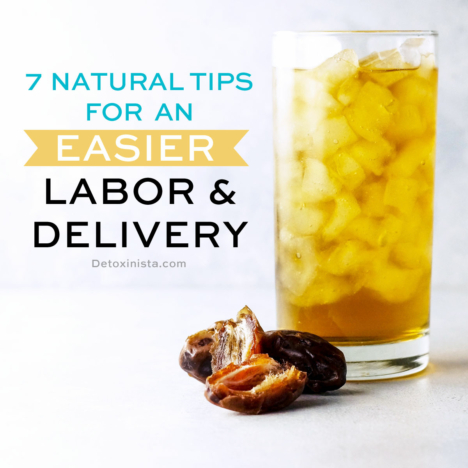
- Dates. Research has shown that women who consume 6 dates per day for 4 weeks prior to their estimated due date are more likely to go into spontaneous labor, have a shorter first stage of labor, and have a higher cervical dilation upon admission to the hospital when compared to women who do not consume any dates. [source] These Date Energy Balls, Raw Brownie Bites, and Peanut Butter “Cookie” Larabars are all ways to increase your date consumption!
- Red Raspberry Leaf Tea. Red raspberry leaf tea is believed to help balance hormones and tone the uterus, possibly due to its high content of vitamins A, B, C, and E, as well as important minerals such as magnesium, potassium, and calcium. According to this study, red raspberry leaf tea has been shown to shorten the duration of labor and may reduce the need for medical interventions, such as the need for c-sections, forceps, and vacuum births. I’ve heard that anywhere from 3 to 4 cups of tea per day is recommended in the third trimester, and I’m currently using this brand to make brewed iced tea.
- Alfalfa. This is something I did not take during my first pregnancy, but my doula and many midwives recommend it because it naturally contains high levels of vitamin K, which is essential for blood clotting —and therefore it might help prevent postpartum hemorrhaging. If you’d prefer to skip a supplement, vitamin K can be found in dark leafy greens like kale, spinach, and collard greens, and you can also brew alfalfa as a tea.
- Stevia. This recommendation was a shocker to me, as many of you are familiar with my negative experience with stevia in the past. According to my doula, she has seen women increase their amniotic fluid rather quickly by adding a drop of pure stevia to each glass of water they drink, and in some cases, they’ve been able to avoid induction due to low amniotic fluid using this method. I’ve only been able to find anecdotal evidence regarding this information, so I can’t say for certain that it’s proven. However, I suppose it would be worth a try if you’re concerned about low fluid levels. It’s not currently a concern for my own pregnancy, so I’m not taking it, but I thought I’d pass along the tip. (Do be sure to look for pure stevia, as many brands have added ingredients that are not ideal.)
- Squats. Squats are one of the best exercises you can do to prepare for labor, as they can create more room for your baby to enter the birth canal. The American Pregnancy Association recommends squatting during labor because it can open your pelvic outlet by 10 percent! I did my fair share of squats using Physique 57 workouts during my last pregnancy, and my doula recommends aiming for 300 squats a day(!) if you want an easier birthing experience. One word of caution: If your baby is breech, you might want to avoid squatting, as it could move them down into the birth canal in a non-ideal birthing position. Towards the end of your pregnancy, you may want to ensure that the baby is head-down before engaging in too many squats. (We used Rebozo Sifting during my last pregnancy to get the baby out of the sunny-side-up position, and I love Spinning Babies for other non-invasive baby repositioning techniques.)
- Walking. Not only is walking a great low-impact workout for moms in general, but it’s also thought to help move your baby down into your cervix towards the end of pregnancy. Walking may also help stimulate the release of oxytocin, the hormone that helps trigger and regulate contractions. Therefore, many moms nearing or past their due date may want to increase their walking to help naturally progress labor.
- Positive affirmations. There were times that I felt pretty silly listening to positive pregnancy affirmations during my first pregnancy (I used the ones from Hypnobabies while prepping dinner each night), but after my first laboring experience, I swear by them. At the time, I felt like they weren’t “doing anything” for me, but when labor actually arrived, I didn’t actually feel like I was in pain– I’d describe my contractions as uncomfortable, but not painful, and I think that’s in large part because of the mentality I had going into it. (Baby’s head crowning is another story, but at least that part is fairly brief!)
What about Evening Primrose Oil?
A common recommendation from midwives and doulas is to take Evening Primrose Oil either orally or vaginally starting around 37 weeks, as it’s thought to help ripen your cervix. I did sporadically use it orally during my last pregnancy, but upon doing further research, I found this study which showed that EPO taken orally does not help to shorten gestation or overall length of labor, and in some cases, it actually increased the incidence of interventions. (In other words, even if it does ripen your cervix, there doesn’t seem to be an overall benefit from that.)
Because I couldn’t find sufficient evidence that this supplement is safe or effective, I’m not including it in my list above, even though it remains a very common recommendation in the natural health community.
Other than these extra supplements listed above, the only things I’ve added to my routine during this pregnancy have been:
- Prenatal vitamins. I mostly take these during the first trimester, then gradually fizzle out as my diet and appetite improve.
- Magnesium. I usually start taking this in the second trimester to prevent leg cramps and constipation, as well as to help regulate blood sugar.
- Vitamin C. Since immunity is compromised during pregnancy, I take this for a boost and hope it will help prevent a positive Group B Strep result this time around. (I was GBS+ last time!)
- Probiotics. I also take these in the hopes of avoiding a positive Group B Strep result and promote good bacteria in my gut.
- Collagen Peptides. I started using this again as a smoothie supplement during my third trimester, in the hopes that it would promote skin elasticity as my baby continues to grow.
- Udo’s DHA Oil. DHA is crucial to developing brain, eye, and heart health in infants and children, so I like to up my intake using high-quality algae oil. (Fish get their DHA content by eating algae, too, so this is cutting out the middle man.)
I regretted not writing down everything I did during my last pregnancy, so I hope that this list will help anyone in a similar position who might want to help their bodies prepare for the big day. While we can’t naturally control when we go into labor, it’s reassuring to feel like we’re taking some proactive steps in the process.
—
Reader Feedback: Did you do anything special to prepare for labor? I’d love to hear more tips and tricks in the comments below!










Hi. For the squatting recommendation- is that throughout pregnancy or just in those last three to four weeks?
Thanks,
Brittany
Very very informative…
In my country most women use fresh orange leaves by picking a handful of the younger looking ones and bruising them or crushing them to later add them to a bottle of water, after a while it is strained and kept until active labour…
Be sure to take it on the way to the hospital or just before you enter coz you might just deliver in your car and name your baby Carson,😂lols.
Only take when baby is engaged or in perfect head down position, and when you are in active labour…
It’s very fast and effective for women who are in the get this baby out stage…
This is done along with a whole lot of walking… It’s normal to see a lot of third trimester women up and down in the streets here… They’re very strong.. and Walk a lot in second and third trimester.