
This post may contain affiliate links. Please read my disclosure and privacy policy.

Tahini (a.k.a. ground sesame seed paste) is one of my favorite ingredients for dairy-free cooking. It adds creaminess and nutrients to every bite. However, not all tahini is created equal when it comes to flavor or texture. So, it might be something you want to try making at home.
Luckily for us, it’s super easy to make homemade tahini. (It takes about 10 minutes!)
All you’ll need is hulled sesame seeds and some patience. Be sure to read the tips below, because the first time I tried making tahini at home, it was not delicious. I’ll help you avoid making the same mistake I did!
⭐⭐⭐⭐⭐ Featured Review
“I had no idea it was this easy! I love that you don’t use added oil to make this tahini recipe. I follow a whole foods plant based diet, so this fits right in with my needs. And it tastes really good!” – Rachel
Ingredients You’ll Need
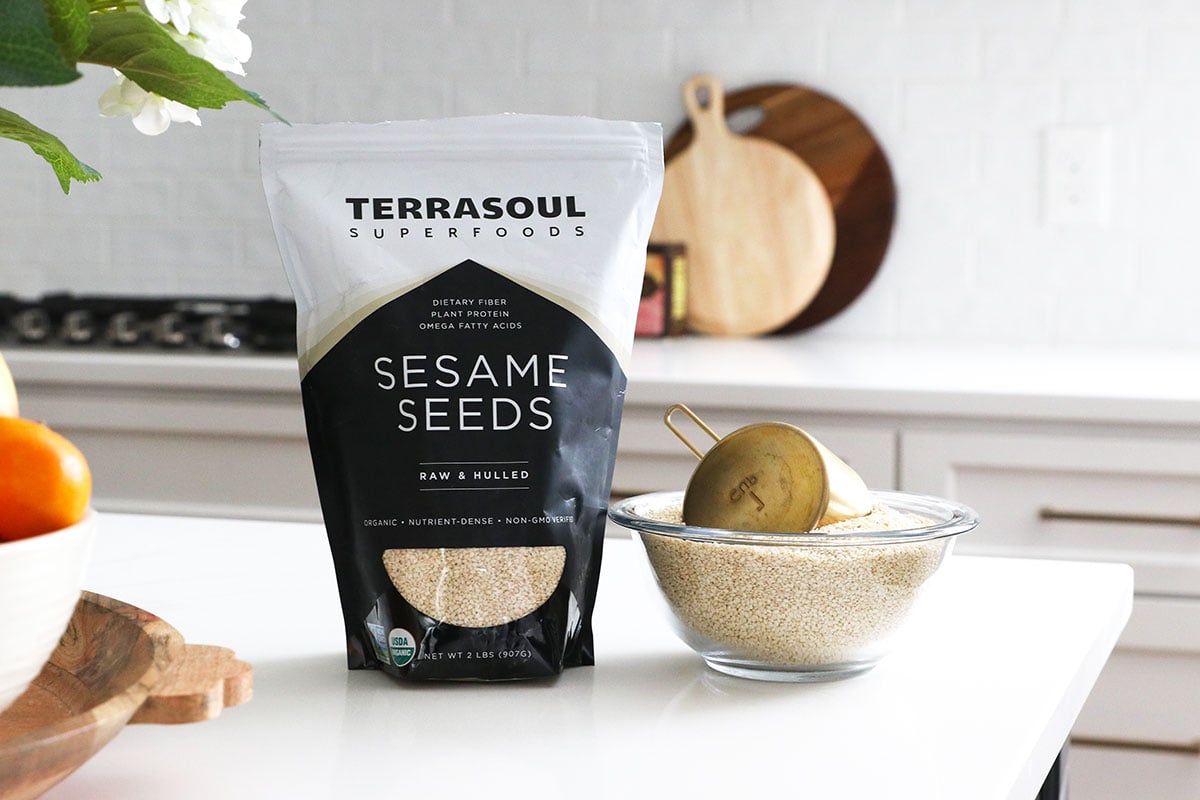
Sesame seeds. It’s important that you shop for hulled sesame seeds for this recipe. Hulled means the bitter outer shell has been removed. If you end up buying unhulled sesame seeds, the tahini flavor will be very bitter.
You don’t need any added oil or salt, so this recipe is as easy as possible. Unlike making homemade almond butter, I don’t even toast the seeds before getting started.
Note: I don’t toast the sesame seeds before getting started, because I like the taste of raw tahini, but you can toast them in a skillet for 5 minutes (no need to add oil) until they are fragrant, if you prefer a toasted flavor. Let them cool for at least 10 minutes before processing, so they won’t melt the plastic bowl of your food processor.
How to make Tahini Paste
Step 1:
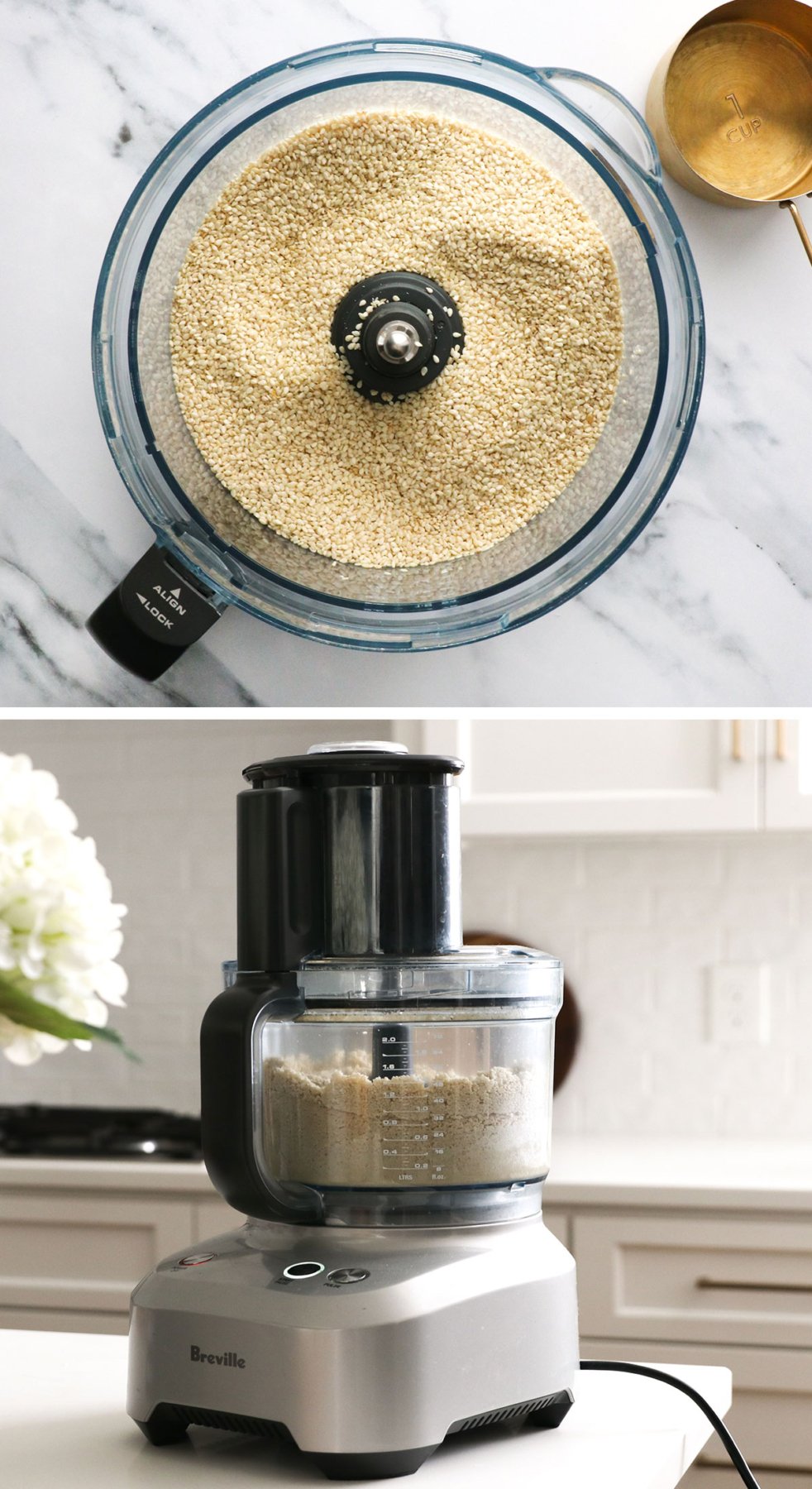
Add one pound of hulled sesame seeds to a large food processor fitted with an S-blade. I’m using a 12-cup food processor (affiliate link) in these photos. If you don’t have a food scale at home, one pound of sesame seeds is a little over 3 cups when using standard US measurements.
Secure the lid on your food processor and let it run for about 5 minutes. There may be a point where it looks like the seeds are crawling up the sides of your machine and maybe not moving that much. Don’t worry, just let the food processor keep processing; the seeds will eventually fall down and make their way towards the blades.
Step 2:
After 5 minutes of processing the sesame seeds, stop the machine, remove the lid, and scrape down the sides with a spatula. This will ensure that all of the seeds are processed smoothly.
Return the lid and continue processing. Over the next 3 to 5 minutes, you’ll hear the tahini start to become smoother. It will start to move faster as it breaks down, too, so don’t be surprised if you see the tahini suddenly whipping around the food processor. (You’ll hear a sloshing sound eventually, too.)
Want to save this for later?
At the 8-minute mark (in total) I felt the need to check on the tahini, and as you can see in the photo below, it was almost smooth enough. But, I secured the lid again and let it run for 2 more minutes.

Step 3:
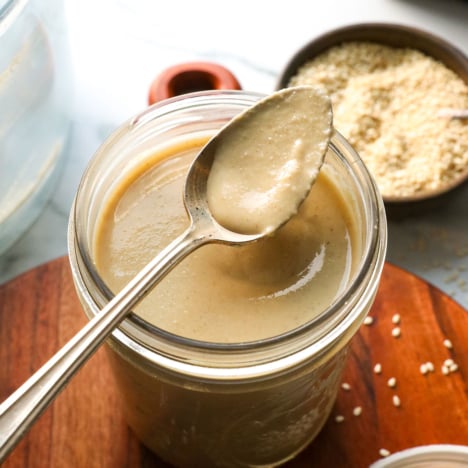
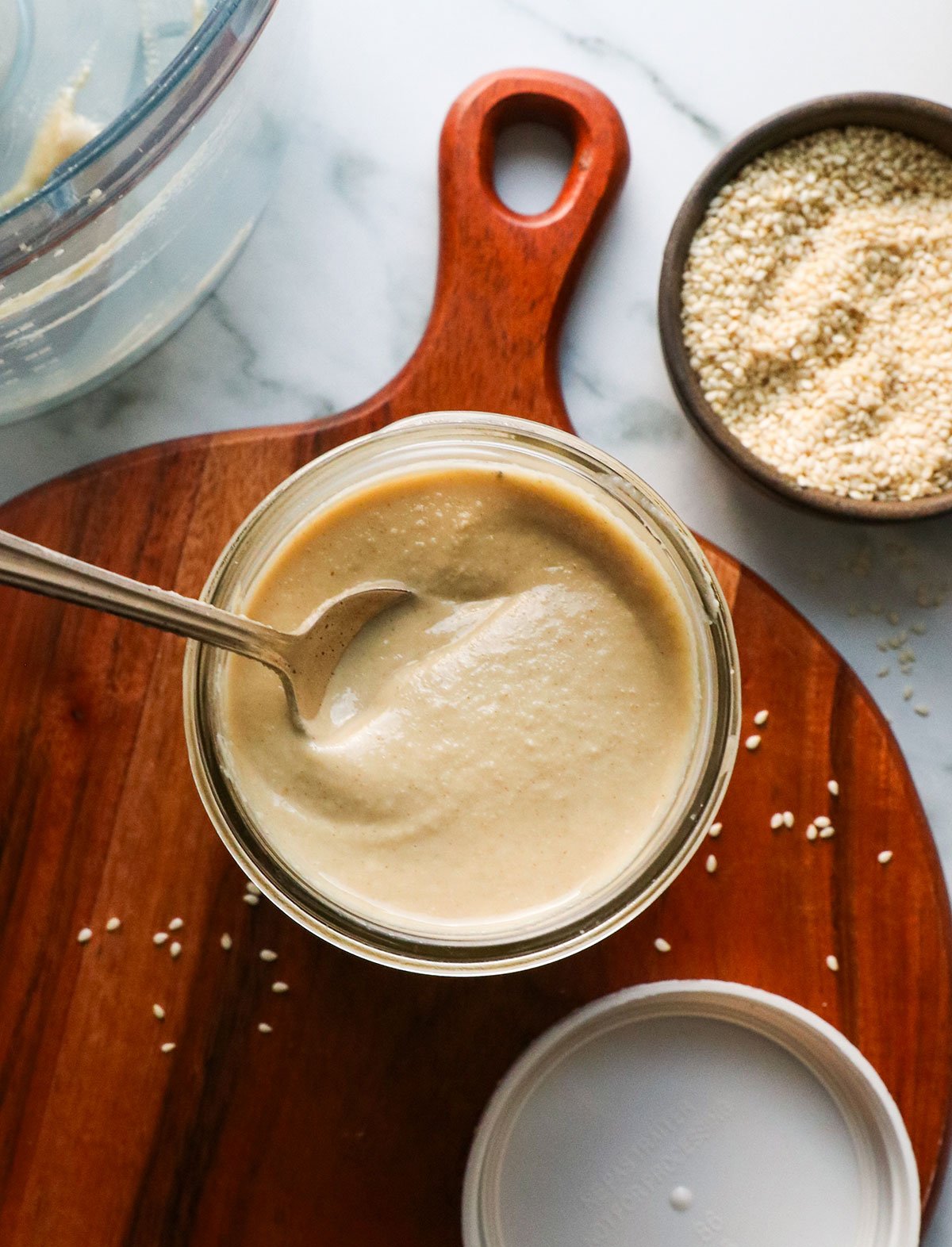
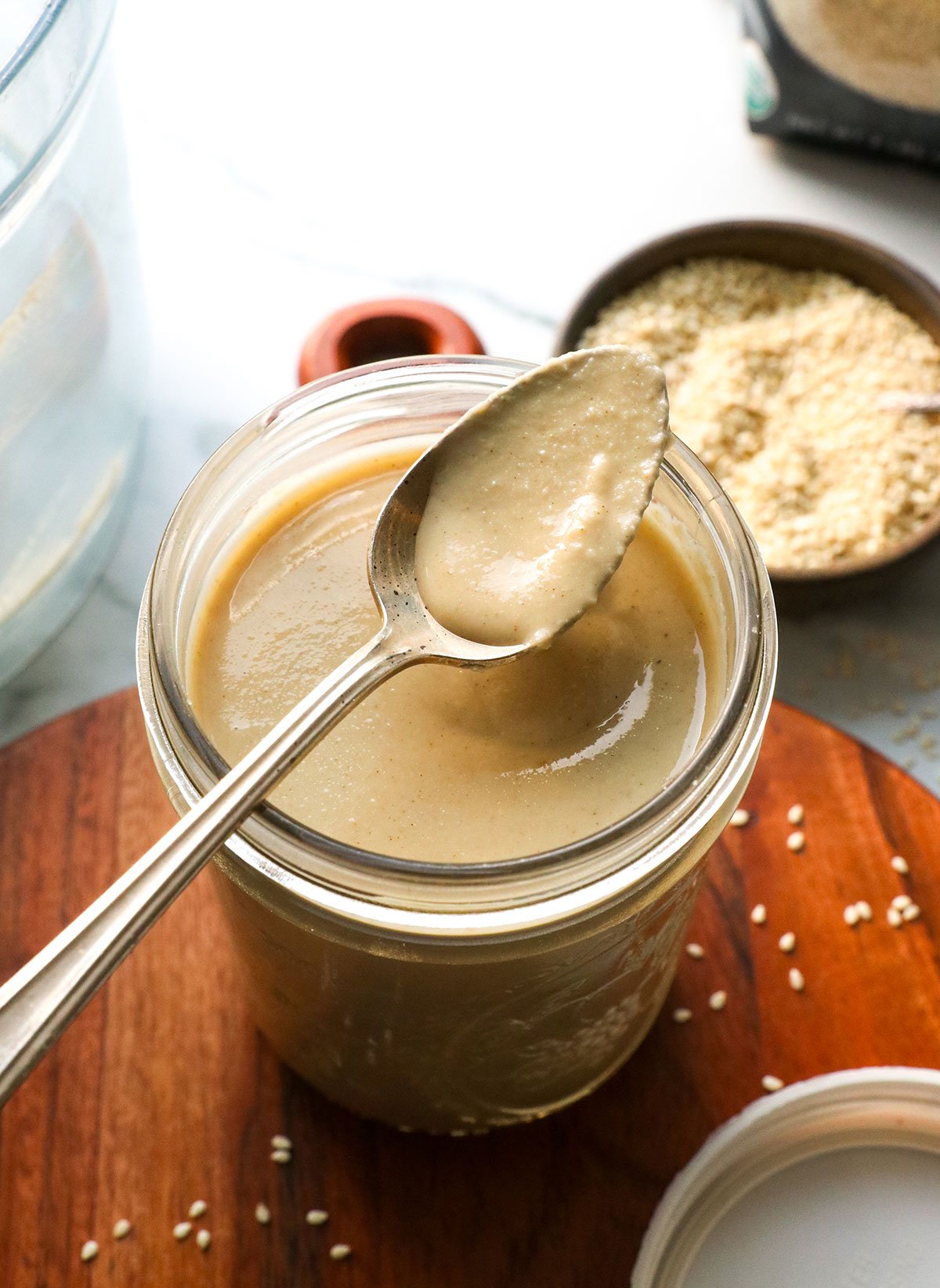
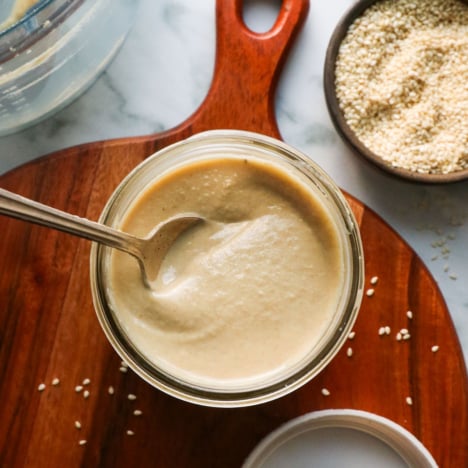
After 10 total minutes of food processing, my tahini looks smooth and drippy in consistency. (Similar to store-bought brands, like Artisana and Soom.)
The tahini should drip off your spoon or spatula after you stir it. It will still be slightly thick, and it will have a grainy texture when you taste it, just like store-bought tahini.
Transfer it to a glass jar with a lid, but let it cool before you seal the lid. (That way it won’t steam in the jar; added moisture might make it spoil faster.)

Storage Tips
Homemade tahini should keep well in an airtight container in the fridge for up to a month. Take care to use clean, dry utensils every time you use it, so you don’t add moisture to the jar. (That will make it spoil faster.)
In theory, homemade tahini could last much longer, but we usually use it all before then. See the recipe ideas below the printable recipe card if you want some inspiration.
How to Make Tahini (Without Oil!)
Ingredients
- 1 pound hulled sesame seeds (see notes)
Instructions
- Pour the hulled sesame seeds into the bowl of a large food processor fitted with an "S" blade, secure the lid, and start processing. (I use a 12-cup food processor.)
- The seeds will take roughly 5 minutes to break down into a crumbly texture, so let the food processor run without stopping, if possible. You may see the seeds start to climb the walls of the food processor at times, but they will eventually fall back down towards the blades.
- After 5 minutes, stop the machine, remove the lid, and scrape down the sides to make sure everything processes evenly. Then secure the lid and process the seeds again, until the tahini becomes silky-smooth. It should take roughly 5 more minutes. (So, 10 minutes total of processing.) You'll hear a change as the tahini gets runnier; it will start to sound more "sloshy" as the seeds release their natural oils and it will look like it's spinning much faster.
- The tahini is done when it's smooth, with a runny or drippy texture. There will still be a slight graininess when you taste it, but ultimately it will be pretty creamy looking. Transfer the tahini to a clean 16 ounce jar, and seal it with an airtight lid. Tahini can be stored in the fridge for up to a month.
Notes
Nutrition
Recipes that Use Tahini
- Lemon Tahini Dressing
- Cucumber Tahini Salad Dressing
- Zucchini Hummus
- Broccoli Salad
- Roasted Vegetable Pasta Salad
If you try this homemade tahini, please leave a comment and star rating below to let me know how you like it.








I have been looking for a dyi tahini paste ever since I found out most store-bought tahini has added oil that they dont label on their product.
I made this recipe, however, I did toast the seed before blending. It turned out perfect. Its miles better than store-bought and I feel so much better knowing whats in it!
I want to make this but I am confused. In the description you say “ Sesame seeds are also known for having more calcium than milk, but keep in mind that most of the calcium is found in the hull– and this recipe uses sesame seeds with the hull removed. (Because it tastes better.)” but then the recipe calls for hulled sesame seeds. Now I’m unsure which to purchase. Please assist 🙂
Forget the question I just asked. Lack of sleep and multitasking had me misunderstand. You were clear 🙂
I had to add some oil and some water to get a paste, so this recipe requires a powerful food processor
Simple and straightforward. Thank you!
I made the recipe using my Cuisinart 11 cup 550 watt food processor and it took about twice as long. I did keep stopping the machine about every 3 minutes initially, as I had concerns about what the motor could handle. Still, it eventually came out fine, if not quite ‘drippy’. (I noticed your FP is 1000 watts).Looking forward to making hummus burgers with it.
Thanks for the feedback! It’s great to know how it turns out in other food processors. Hope you enjoy the hummus burgers!
I had no idea it was this easy! I love that you don’t use added oil to make this tahini recipe. I follow a whole foods plant based diet, so this fits right in with my needs. And it tastes really good!
I’m so glad to hear that, Rachel!
Thanks Megan! Can’t wait to try this homemade version, instead of buying my usual bran at a whole Foods!
I have a Vitamiz – any alterations to use it versus my food processor?
You’ll probably just have to use the tamper to keep it moving in the base of the Vitamix– unless you have one of the newer models with a wider base. My Vitamix has a narrow base, and that makes it difficult to make nut and seed butters because the blade speed is almost too much for them. Definitely plan on stopping and scraping down the sides a lot to keep everything moving in a blender.