
This post may contain affiliate links. Please read my disclosure and privacy policy.

I’m embarrassed to admit it, but for years I struggled with binge eating. When others were around me, I would eat healthy, normal-looking meals.
But, when I was by myself, I would gorge on junk food until I felt sick. It was a heavy secret to keep, affecting not only my weight and overall health but also my social life and relationships. (Some nights I would rather stay home and secretly eat than hang out with my family or friends.)
Today I want to share some of the steps I took to finally stop binge eating, in the hopes that it might help someone else out there who might be struggling, too.
Disclaimer: If you are feeling suicidal, severely depressed, or in need of medical attention, please see a licensed healthcare provider. This website is not intended to be a substitute for medical advice.
What Causes Binge Eating?
I don’t believe there is just one answer as to what causes people to start binge eating, but it seems that one common cause is having a restricted diet at some point in your life.
This could have happened when you were a child, if well-meaning parents attempted to limit your food intake to help prevent childhood obesity, or it might have happened later in life when you attempted to diet to lose weight.
(In my case, it was the latter.)
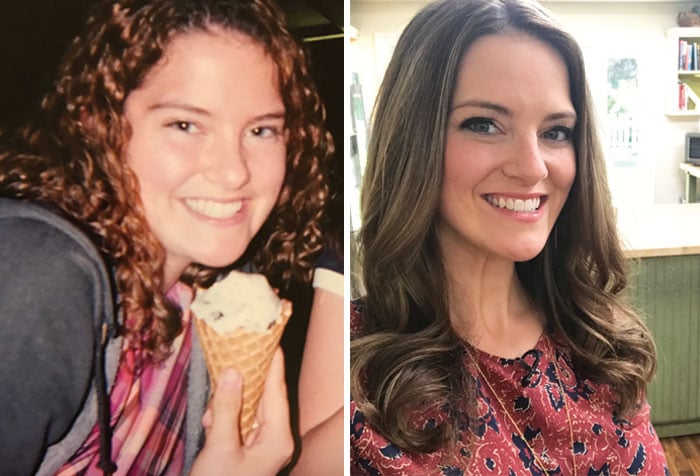
Not surprisingly, depression can also play a role in binge eating. My suffering hit its peak when I was working from home in Los Angeles, as I felt very isolated and didn’t have a lot of human interaction each day.
I also had a nutritionally poor diet, which probably contributed to those feelings of depression, and that left me feeling malnourished. This combination led to more serious bouts of binge eating as you’ll see below.
What is Considered Binge Eating?
Binge eating is defined as the consumption of a large quantity of food in a short period of time.
In many cases, the person binge eating feels out of control and eats WAY past their comfort level. For a person suffering from Binge Eating Disorder, there is no purging after the binge (which is what makes it different from Bulimia.)
I would imagine that almost everyone has experienced some level of emotional eating, or comfort eating, at some point in his or her life, but it’s the eating far past your comfort level or feeling out of control that sets binge eating apart from simply “splurging.”
A binge can vary from person to person, as it’s kind of up to self-interpretation. For some, they may tend to binge eat at night, after a stressful day at work, or after a day of a low-calorie dieting.
For others, it may be a full day of binge eating, particularly on days leading up to starting a strict diet. One thing that most binges have in common is that the eating is done in secret, as the person is ashamed of his or her actions.
Here’s an example of what a full day of secret binge eating looked like for me:
- Morning: I’d go to McDonald’s and order an Extra Value Meal (which included a breakfast biscuit and hash browns), then realize that I could even be more indulgent and order a second meal. I’d order two cinnamon rolls, as well, because why not? I took my massive amount of food home and devoured it all in about 15-20 minutes. After that I would feel slightly guilty, but still excited to eat more food.
- Afternoon: I’d order a large, deep-dish pizza. While I was waiting for it to be delivered, I’d eat cookies and potato chips, and anything else that might might be off-limits to me in the near future.
- Early Evening: This was often my last chance to eat something before someone else could get home and interrupt my secret eating, so I’d walk to the convenience store across the street and buy a pint of ice cream, or a king-size candy bar, or both. I’d eat as much as I could, then I’d get rid of ALL of the evidence, taking out the trash so that no one would see my empty food wrappers.
- Evening: I’d make myself a light salad or healthy dinner to eat in front of my family, and act as if my stomach wasn’t killing me, even though I felt miserable. I’d go to bed feeling guilty, depressed, and ashamed, with a resolution to eat “perfectly” the next day.
A binge day like this would usually occur anytime that I was planning to try a super-strict diet, like a juice fast, an all-raw diet, a candida cleanse, or a low-carb protocol (I tried it all!).
The more strict my diet, the more drastic the binge would be.
Also, my binges rarely were contained to just one day. Usually, I would binge-eat like that one to three times a week. If I slipped up during a dieting day, the rest of that day would turn into a binge because the way I saw it, I had already “blown it” for the day and I might as well start fresh tomorrow.
Mentally, I remember reasoning with myself that I would have a better “before” picture to compare to later when I lost weight after my diet since I’d be so bloated from binge-eating. (What a great excuse to eat with reckless abandon!)
The only problem was… it was really hard to stop binge eating, and it was even harder to stick to a strict diet for very long.
On a side note, days like this one would also wreak havoc on my budget. I was too ashamed to keep these “bad” foods in my fridge, so I would buy them and discard the evidence, which is a huge waste across the board. You would think that being on a tight budget would have stopped me at the time, but it didn’t.
Binge eating, in general, doesn’t make logical sense, which is why it’s so hard to explain it to others who haven’t experienced it.
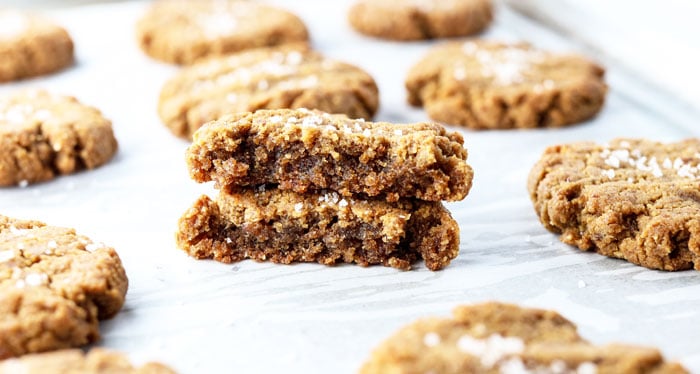
Stuck In A Cycle of Yo-Yo Dieting
I suffered through this cycle for years because I was always convinced that if I could just find the perfect diet, or reach a certain goal weight or clothing size, that my issues would go away.
I wouldn’t stop dieting, and therefore I couldn’t stop binge eating, either.
I also felt like I was “getting away with it” because I never gained THAT much weight, despite my crazy eating habits. I definitely did gain weight, and my clothing size did fluctuate often, but I would always follow a super-strict diet for 2 to 4 weeks and lose the weight again. (Though, this did get harder to maintain over time. Your body won’t always respond as well to the same diet over and over again.)
Then the cycle would start all over again. I was stuck in a cycle of yo-yo dieting.

How I Finally Stopped Binge Eating
I’d love to say there was a “magic cure” that made things click, but it didn’t happen overnight.
For me, the change was more gradual.
By taking the steps below, my binge eating sessions became shorter, less severe, and happened far less frequently. Eventually, they started to simply resemble the dietary “splurges” that normal people have. (Like having a couple of cookies after family dinner, or going out for ice cream with friends.) Now, I eat like a healthy, normal person with a few splurges here and there.
The following things helped me get there:
- I stopped dieting. This was a non-negotiable step for me. I had to stop restricting my food choices because restriction led me to binge eating. Every. Single. Time. No more calorie counting or thinking about macronutrients for me. In fact, I needed to make sure I was eating plenty of nourishing food so that my body didn’t feel restricted at all. When you eat enough, your cravings will eventually diminish naturally. (This is also why I enjoy plenty of fresh fruit– when I eat fruit, I have almost no sugar cravings.)
- I stopped labeling foods as “good” or “bad.” This one is tricky because I truly do believe that some foods are better and more nutritious than others. I think we should primarily focus on eating real, whole foods as much as possible, and I do think that processed foods should be minimized. However, for the sake of my mental health, I don’t feel guilty about moments when I want to eat french fries, pizza, or a real donut. It really is okay to eat these things now and then! When I don’t feel guilty about it, I go right back to eating salads, smoothies, and healthy dinners– usually appreciating how good they make me feel even more. I try to practice this mentality with my kids, too, so they hopefully won’t grow up with issues around food.
- I dropped all of my dietary labels. Along the same lines, I also decided to stop calling myself a vegetarian, because it was not doing me any favors from a mental health perspective. I needed to be allowed to eat any food I wanted, including meat. For the most part, I still don’t like to eat meat– but every now and then I want to be able to have a cheeseburger, or slice of pepperoni pizza, or a bowl of chicken soup, without feeling guilty about it. (Had I become a vegetarian for strong ethical reasons, I don’t think this would have been as much of an issue, but I became a vegetarian primarily because I wasn’t that fond of meat and I thought I’d be leaner.)
- I started practicing daily self-care. Have you heard the phrase, “Fake it until you make it?” Even if you’re not totally happy with how your body looks or feels, you have to start acting like you LOVE it. With enough practice, you will! To get started, I made a list of things that make me feel good– like dry skin brushing, sitting in a sauna, going for a walk outdoors, or even taking a nap– and then I tried to practice one or more of those things daily. I’ve found that the more I take care of myself, the more I want to keep it up. It’s momentum-building! (As a bonus, taking a walk outside makes me feel better than eating a whole sleeve of cookies.)
- I only eat food that I truly love. I think it’s really important to start noticing how foods make you feel and what you love the taste of. When I stopped dieting, I let myself eat anything and everything– including fast food and junk food. And you know what I realized? Most of that junk food appealed to me because I had made it “forbidden.” When you tell yourself you can’t have something, you make that very thing SO MUCH MORE tempting. When I stopped making certain foods forbidden, I had the opportunity to judge those foods based on their actual taste and texture. Not surprisingly, most of the packaged junk food and fast food options became unappealing, simply because the recipes I make at home do taste better– so now I choose homemade food most of the time because I prefer it. (Not because I feel like I have to.)
Seek Professional Counseling: I was too embarrassed (and broke) to seek professional help at the time, but I still wish I could have seen a counselor for help. I’d recommend anyone who is struggling with binge eating, or another eating disorder, to seek help as soon as possible. I think it would have saved me a lot of time and struggle to have a professional guide me through the recovery process since none of my friends or family could relate to what I was going through.
As an alternative, I did read a lot of books. I can’t say that one book in particular gave me an “a-ha moment,” but I do think that as a whole, they helped gradually change my mindset. Here are a few of the books I found helpful.
Can you stop binge eating AND lose weight?
I think the scariest part of this whole process was the fact that I had to stop dieting in order to stop binge eating. It’s scary to stop dieting because I think everyone assumes that they might gain weight when they let themselves eat whatever they want. (And often the desire to lose weight is what starts this cycle in the first place.)
The truth is, you might gain a couple of pounds when you first allow yourself to eat whatever you want… though, that wasn’t the case for me.
Because I truly let myself eat whatever I wanted, whenever I wanted, I was also able to stop eating those items when I was no longer enjoying them. Forbidden foods lose their appeal when you truly allow yourself to have them anytime.
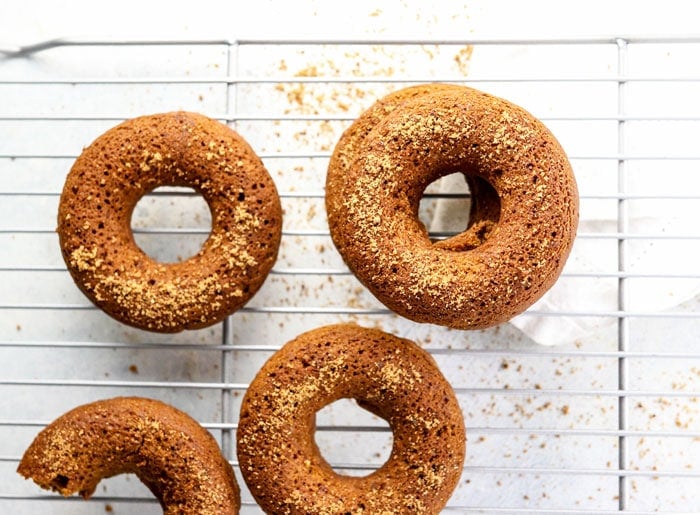
For example, when I was dieting and binge eating, I could have eaten a whole sleeve or two of cookies in one day because I knew I wouldn’t be “allowed” to eat them the next day. I ate more than I needed or even wanted to, simply because they were going to be forbidden to me soon.
When I gave myself permission to eat those cookies whenever I wanted, I would only eat 2 or 3 cookies at a time and then I’d save the rest for the next time I wanted them. Eventually the box could sit in my pantry for a whole month or more.
I became one of those people who “forgot” that the cookies were even there. (Which certainly never happened to me before!)
Get Rid of the “All or Nothing” Mentality
Something that I preach here on the blog, as well as in my cookbooks, is that you have to get rid of the “all or nothing” mentality if you want to have a healthy relationship with food.
At the peak of my binge eating, I was either on a diet or I wasn’t– so when I wasn’t dieting, I was binge eating. There was no middle ground.
Now, I try to abide by the popular 80/20 approach, where I eat healthy 80% of the time, but I still splurge 20% of the time with no guilt whatsoever. Despite my lack of dieting, my body naturally lost the excess weight I was carrying– simply because I wasn’t binge eating anymore! I had to trust the process and trust that my body would naturally start craving what it needed when I simply followed my hunger signals. I eat when I’m hungry, and when I start to feel full, I stop. I can always go back for more food if I need it, so there’s no urge to stuff my face all at once.
While it’s super-embarrassing to share my struggles here in such a public space (Hi, Mom! Hello, coworkers!), I hope that my experience will help at least one other person who is out there struggling, too.
If you have any questions, please feel free to ask them in the comments below and I’ll do my best to answer them.











Yes, this helped me. I am working on changing my relationship with food. I have a si.ilar issue in that I restrict food to mostly 1 small meal a day. I have for years, do to training from childhood.
How to change that emotional relationship between me and eating is very hard.
Suggestions?
I just wanted to say thank you so much for sharing. A lot of what you talked about in your post really resonated with me, and it’s so nice to see other’s perspectives, and gain some insight, helpful hints and tricks to get yourself out of a rut. I just bought your Everyday Detox cookbook, and I couldn’t be more thrilled with it. So thank you again for being so awesome!
Aw, thanks! Hope the new book helps, too!
Thank you! I’ve never read a more succinct description of what I feel and go through in a binge. Oddly, I’m glad to know I’m not the only one who hides my trash, I even go so far as to stop on the way home to throw trash away in a public bin so no one at home will see it.. I’m at my wits end, tired of the self hatred, and this roller coaster life. I am a certified health coach, and am too embarrassed to coach others because of my secretive binging, my friends and clients believe me to be a healthy eater.. Following your advice, I just made a list of things I love to do to make my body feel better, like soaking my feet in a magnesium bath, dry brushing, cupping, and doing my nails. I’ll concentrate on these things when my mind wanders toward a binge. Thank you.
Thank you for sharing your story, Megan. My habits have not been so severe as yours or other commenters, but I definitely recognize them. I am just now finishing my first “5 day reset” and a shocker for me has been how full I’ve been that I can’t imagine eating things I shouldn’t. In fact we have some leftovers that we’ll probably lose because despite our efforts to eat everything my family is just stuffed, lol. I didn’t even make everything in my plan. I’m learning how much to prepare now but more importantly, it’s been a major aha moment to realize that filling up with nutritious, whole-food based delicious recipes can stop binge habits (at least mild ones) in their tracks–not just me, but my spouse and kids too. We’re excited and motivated to continue trying new recipes and adopting a healthier relationship with food, of all kinds. It frustrates me when I see comments or reviews about caloric content and related, because I feel like I understand exactly why you wouldn’t calculate or publish that. It’s purposeful and for good reason. Again, thank you so much.
I love this philosophy so much, Megan!! I’m afraid I can relate to the binge eating 🙁 In high school I would go from eating as little as possible one day and then “messing up” the next day and just going crazy because I’d already blown it. It’s a horrible, vicious cycle. Now I’m in a MUCH better place and we eat a lot of healthy, delicious food (and some homemade treats, too :).
I’m wondering what your thoughts are on how to help kids have a healthy relationship with food. We have three little boys who LOVE treats and they get a lot of them at friend’s houses, preschool, church, etc. It worries me a little and I want to teach them about making healthy choices without restricting food for them or creating a negative relationship with food. Do you have any thoughts?
I just accidentally found you…I was looking for a steel cut oats recipe….I woke up up this morning, again telling myself that today would be my first day of never eating refined flour nor refined sugar…Then I found you and read your article on how you stopped binge eating…My eyes are full of tears…you described my life…You also gave me really good direction and peace in my heart and mind…Thank you
Hi Megan
You have no idea how much article has helped me. I’ve had bulimia for 20 years and reading this and then the have your cake and skinny jeans book you recommended has made me realise what’s been going on all these years. I finally have the way out thanks to you. Thank you a million times over! 🙂
Megan, I stumbled upon your website by searching Pinterest for Paleo/Candida recipes. Your recipes look amazing (so clear, easy to make, and organized) so I went to your site to read about you (I’m always curious to know what makes people post healthy recipes). I loved reading this post about you…thank you for sharing your story. You have such wonderful insights and offer hope to those who might recognize themselves in your story. Binge eating isn’t talked about often, and I think more people are dealing with it than most of us realize.
Anyway, from one IIN grad to another, thanks for spreading the word about health!
Thank you Megan for sharing your story 5 It gives me hope.
I think you are brave, courageous and beautiful! Thank you for creating such an incredible website. Your recipes are all so delicious and work without fail. I have been struggling with anorexia, bulimia and binge eating for about 20 years now. I have found more balance but I really struggle with night time eating. I will eat dinner and later find myself shoving mostly bread and peanut butter with honey down my throat. Sometimes I wake up in the mornings and feel like I have a “hangover” from it. Is there anything you can suggest that I can do to curb my night time eating? Any help is so appreciated.
The only thing that has helped me with night time eating is making sure I eat a really satisfying, filling dinner. Usually something with plenty of greens, as I think that helps balance cravings, and I also think it’s important that you go to bed at an appropriate time. My urges to eat at night (when I’m not actually hungry) always happen around 10pm– when I should be going to bed! Sometimes I think the body can confuse tired and hunger cues, so make sure you’re getting good sleep, too!