
This post may contain affiliate links. Please read my disclosure and privacy policy.
While buying almond butter at the store is convenient, the flavor is not always ideal. Trader Joe’s makes the best one I’ve tasted (I like their “raw” Almond Butter), but if you don’t have one of those stores near you, this almond butter recipe is the next best thing.
No added oil is required, so all you’ll need is a little patience. It takes less than 30 minutes, and most of that time is hands-off!
We use this homemade almond butter weekly to make dairy-free lattes, vegan fudge, and almond butter blondies. Once you try this recipe, you might find yourself using almond butter more often, too. I’ve included even more ways to use it below!
⭐⭐⭐⭐⭐ Featured Review
“Thank you so, so much — I always had something missing when I made almond butter, thought it needed more oil, but no, it needed more patience — I had no idea it takes that much time, so this was wonderfully helpful.” -Dee
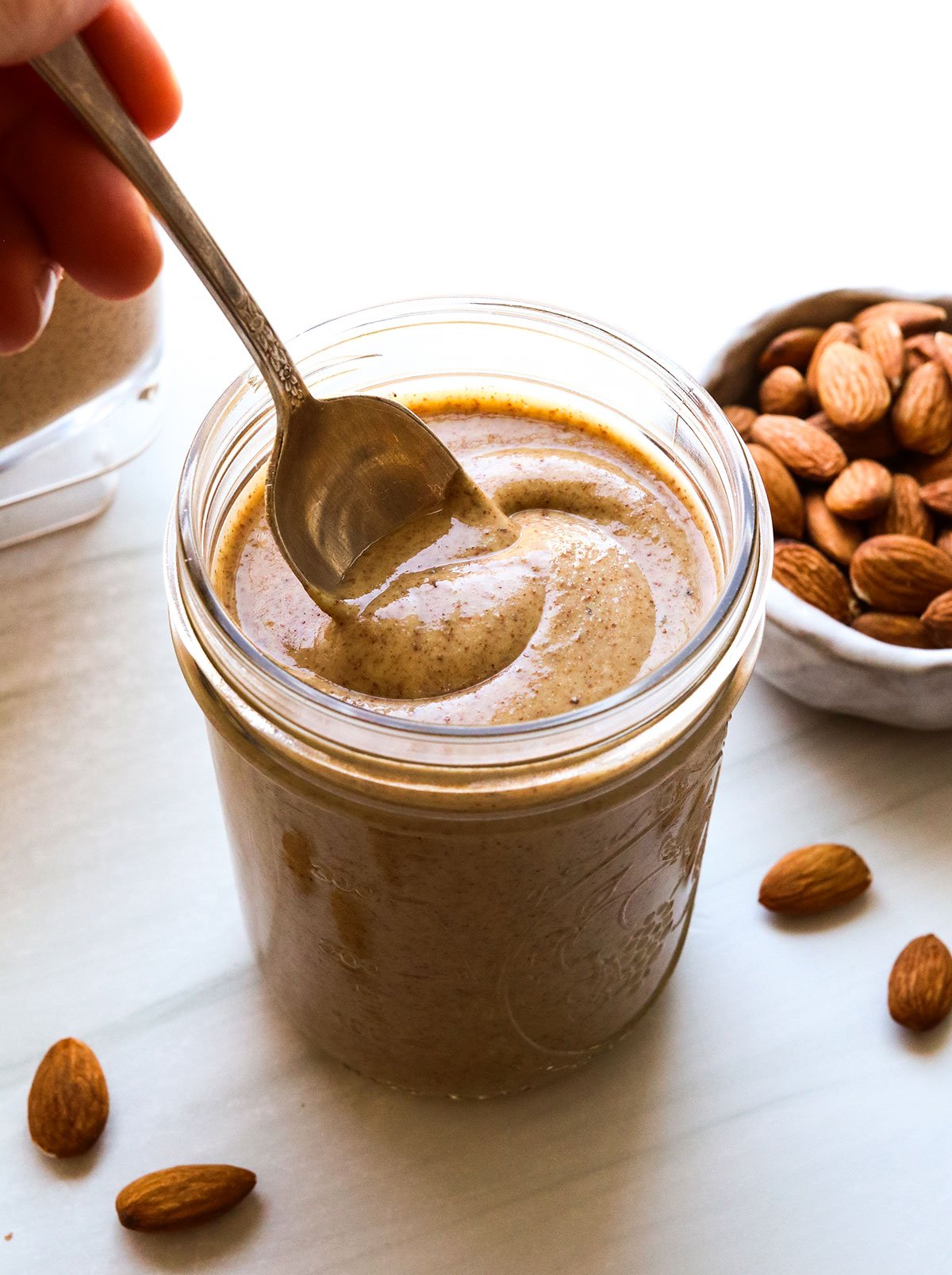
Almond Butter Ingredients
- Almonds. Look for unroasted almonds when shopping, as you will quickly roast them during the first step of this recipe. Even if you’re starting with roasted almonds, it’s a good idea to warm them up as this recipe suggests, so your food processor will have less work to do.
- Salt (optional). You can add salt for extra flavor, if desired. Ground cinnamon can be used, too!
What to Avoid: Don’t add a wet ingredient, like maple syrup, vanilla extract, or honey. Wet ingredients can cause the almond butter to seize (ruining the texture) and make it spoil much faster.
How to Make Almond Butter
Step 1:
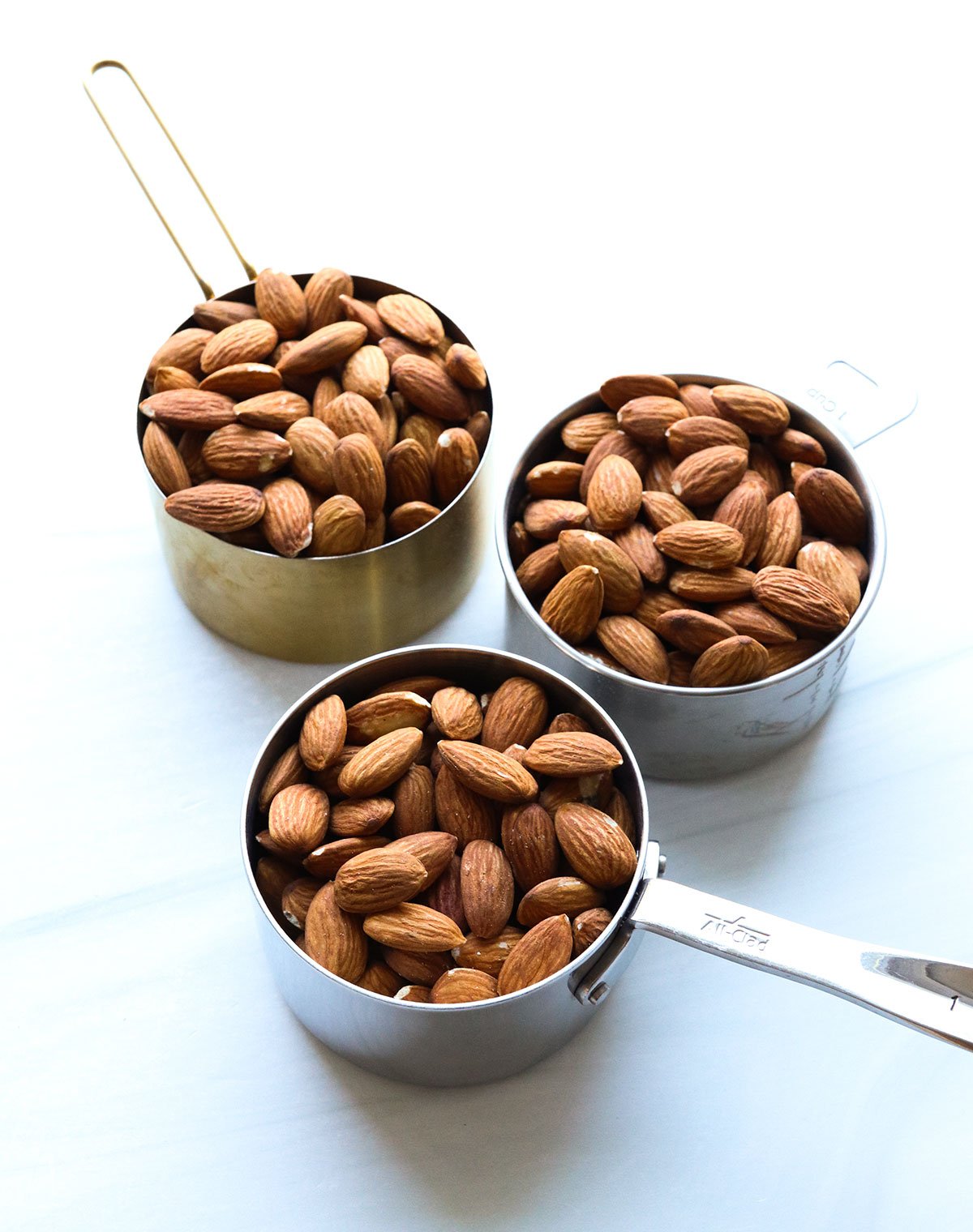
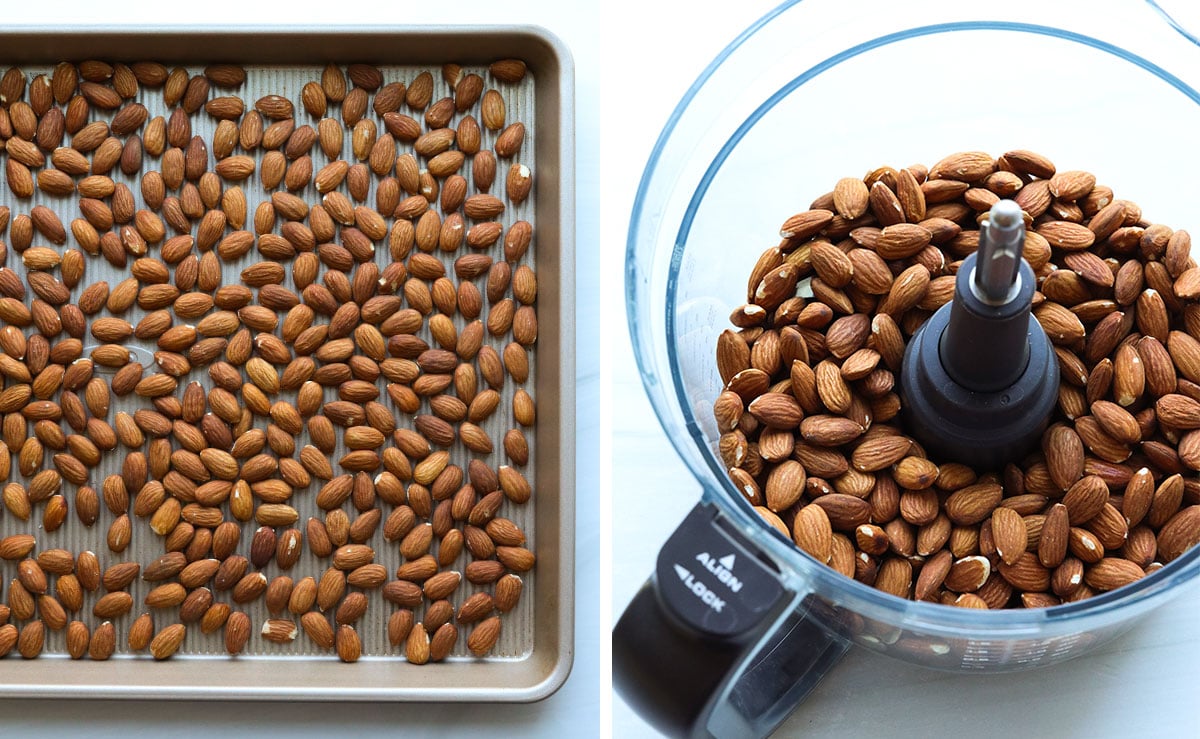
Preheat the oven to 350°F and spread 1 pound (3 cups) of almonds in a single layer on a rimmed baking sheet. Roast the almonds for 10 minutes or until they smell lightly fragrant. This process helps release the natural oil found in almonds, which will make the next steps proceed much faster.
Remove the pan from the oven and let the almonds cool for 10-15 minutes.
Safety Tip: Adding very hot almonds directly from the oven to a food processor or blender could melt the plastic container if you don’t let them cool down first. So be patient!
Step 2:
Once the almonds have cooled for at least 10 minutes (it’s okay if they feel warm to the touch), add them to the bowl of a large food processor fitted with an “S” blade.
Secure the lid and start processing.
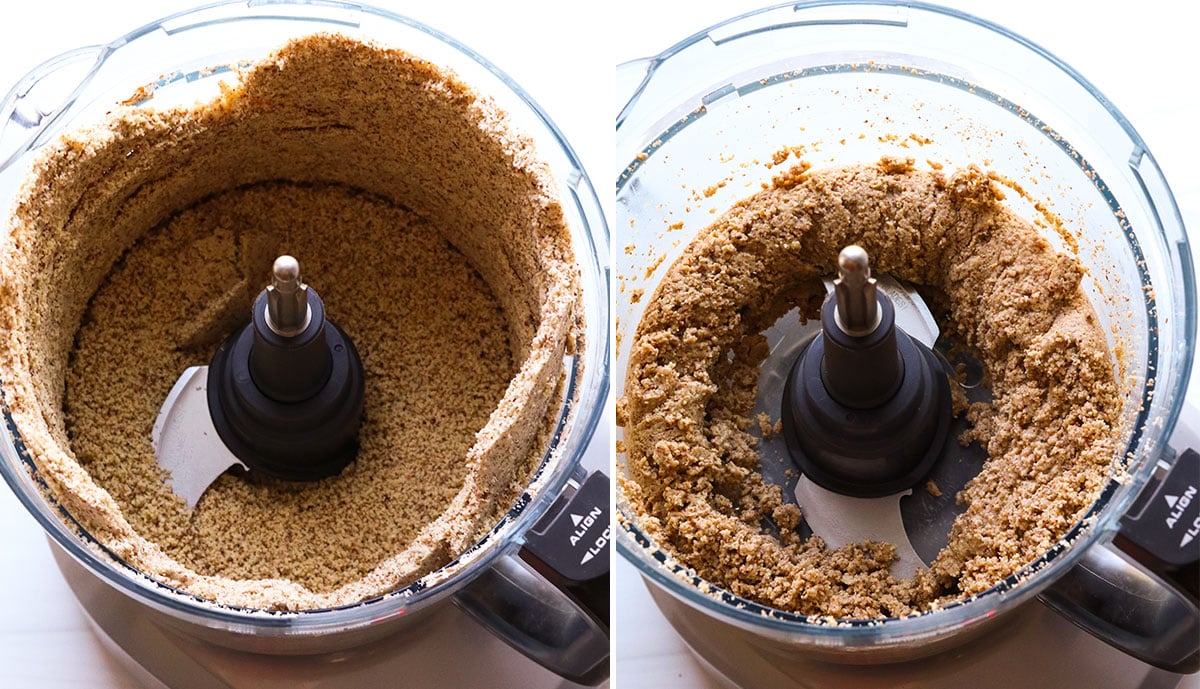
The almonds will creep up the sides of the machine as you blend them, so you can stop and scrape down the sides with a spatula if you prefer. However, around the 4-minute mark, the almonds naturally fall down on their own without any scraping.
Step 3:
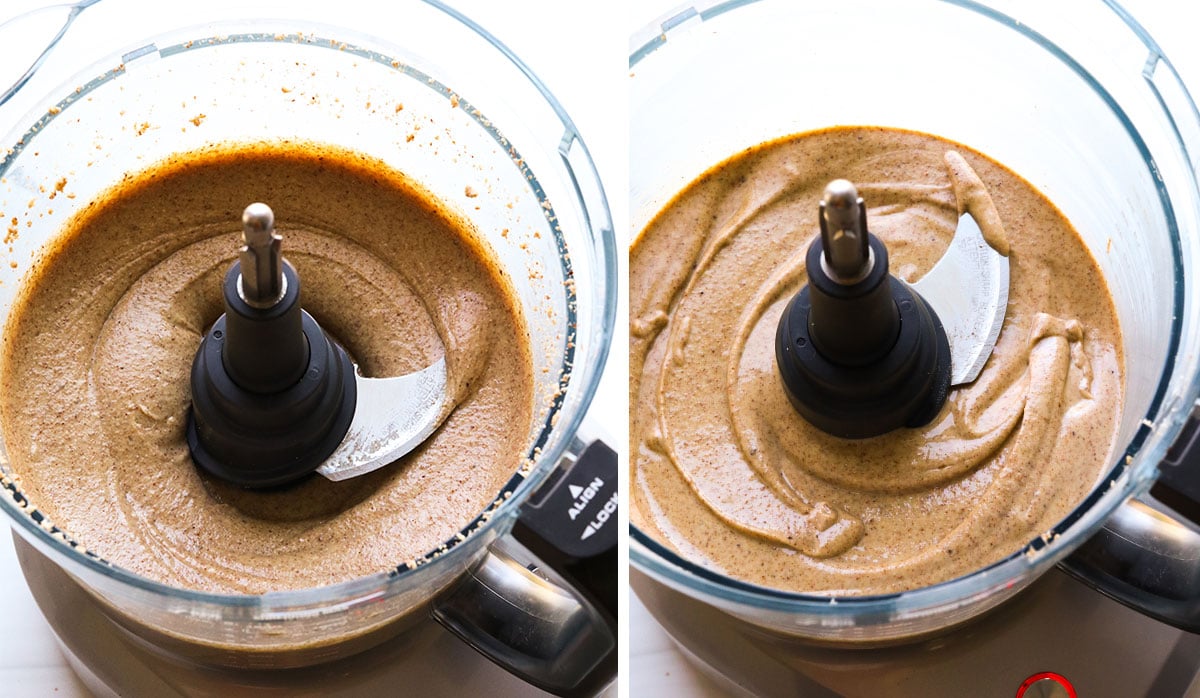
Let the food processor continue to run. After 8 minutes of processing, you may start to hear a “sloshing” sound as the almond butter suddenly becomes runnier.
This is a great sign!
Now you can stop, scrape down the sides of the machine, and add any seasoning you like, such as 1/2 teaspoon of fine sea salt or ground cinnamon. (Remember, no liquids can be added, or it will ruin the texture.)
Step 4:
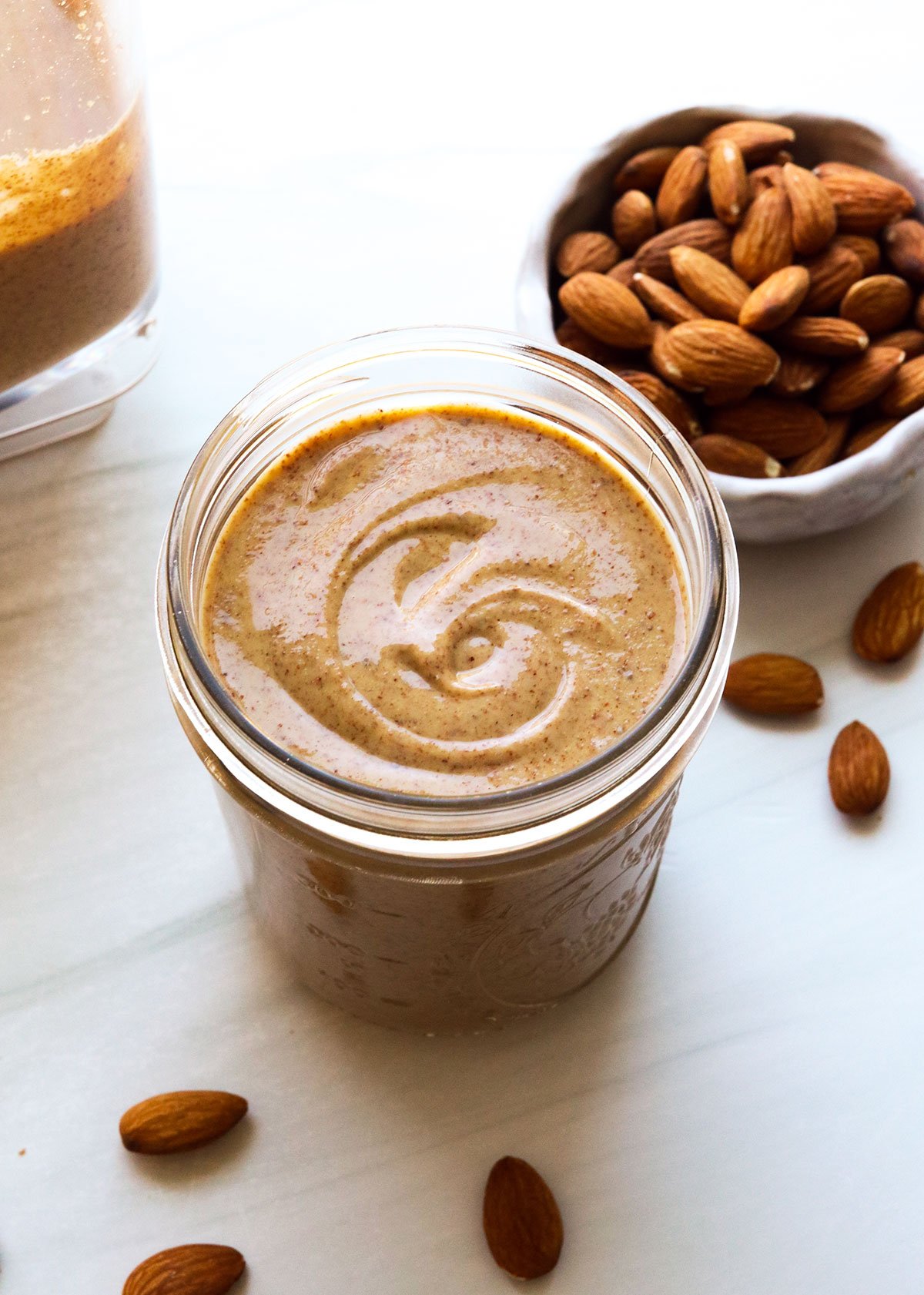
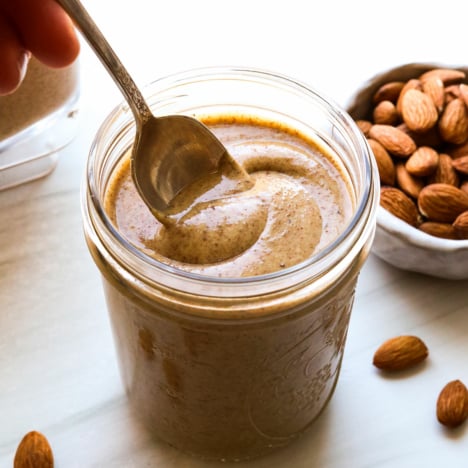
Process for another minute or two, and you should have a creamy almond butter that drips off the spoon. The whole blending process should take 10 minutes or less when you start with warm almonds.
Note: If you need to skip the roasting process, it may take nearly twice as long for raw almonds to break down in a food processor. It can be done, but it’s definitely harder on your machine and requires more patience. This process can take up to 20 minutes if you start with room-temperature almonds.
Almond Butter Storage Tips
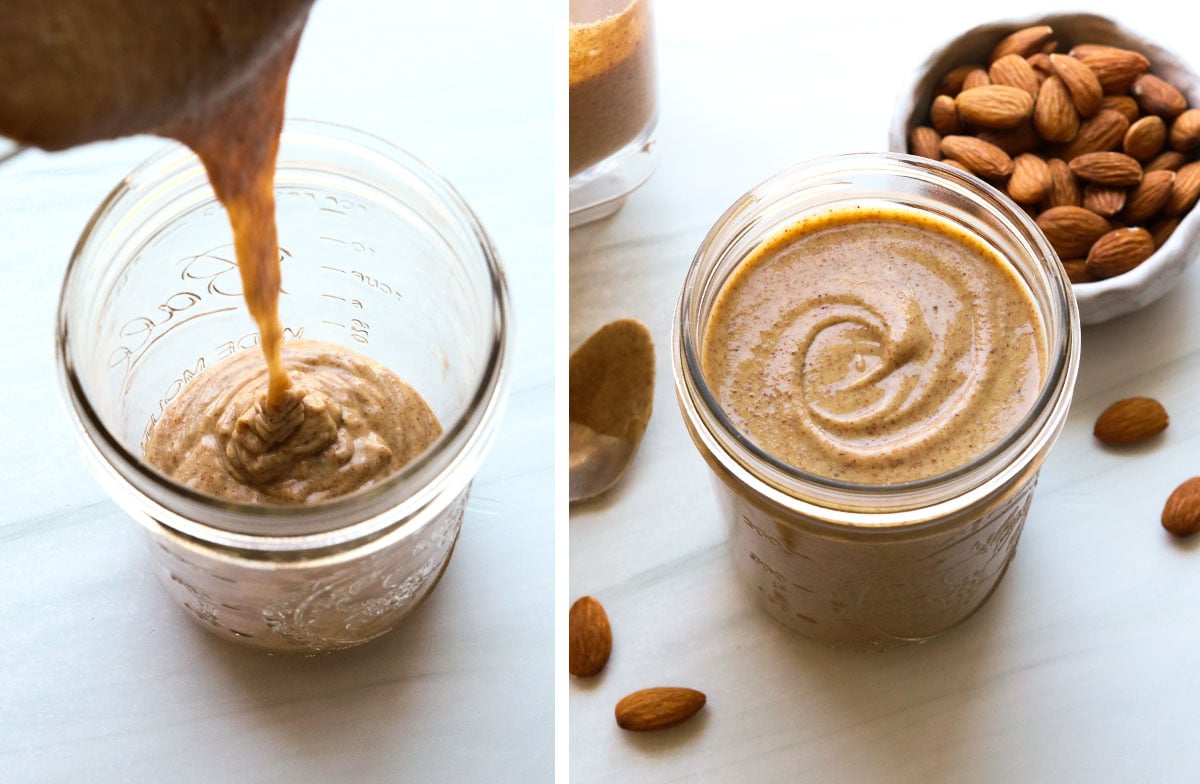
Transfer the homemade almond butter to a 16-ounce mason jar and let it cool completely before securing the lid. Otherwise, steam will collect in the jar, causing the almond butter to spoil more quickly.
Almond butter can be stored in the fridge for up to 2 weeks and may last even longer as long as you don’t introduce any moisture to the jar. Nut butter will thicken when chilled, so that can make it slightly harder to spread on toast, but it will thin out when you bring it to room temperature again.
When you have almond butter on hand, making almond milk is easier, too!
How to make Almond Butter in a Blender
If you don’t have a 12-cup food processor but do have a high-speed blender (like a Vitamix), it can also be used to make homemade almond butter. The difference is that you’ll need to use more almonds and a tamper.
Step 1:
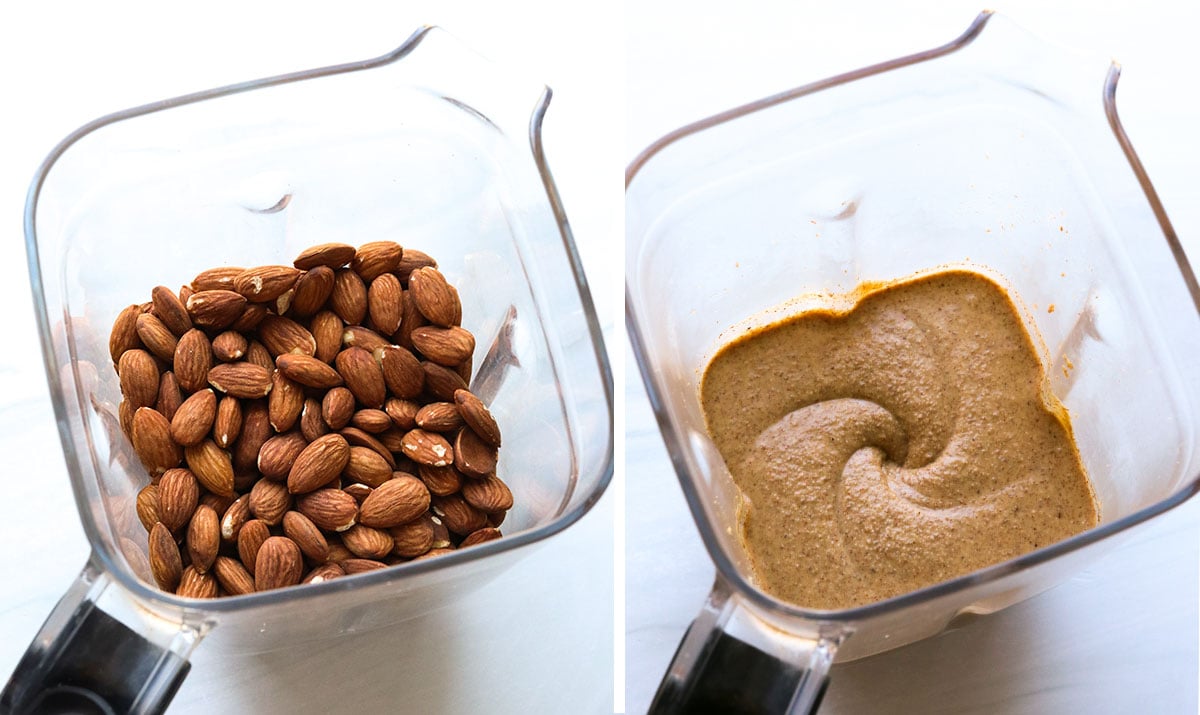
To make almond butter in a blender, roast and cool the almonds as directed above, but start with 4 cups of almonds. This is the minimum quantity required to use a blender.
Step 2:
Secure the lid and blend the almonds on a medium-low speed. You’ll need to use a tamper often to keep the almonds moving. (If your blender doesn’t have a tamper, I don’t recommend this method. It’s too frustrating to have to stop and scrape constantly!)
While you might think using a high-speed blender would be faster than using a food processor, it still took my blender 6 to 7 minutes to achieve a creamy result. This is only 1 minute faster than the food processor method, and it’s not nearly as hands-off.
If you have a food processor, it is my preferred machine for this recipe.
Tip: If your blender is having trouble breaking down the roasted almonds, add a tablespoon of neutral-flavored oil to help the process along. You may need to use up to 4 tablespoons total when blending a difficult batch.
How To Make Almond Butter (Without Adding Oil)
Ingredients
- 1 pound whole almonds (about 3 cups)
Instructions
- Preheat the oven to 350ºF and spread the almonds out in a single layer on a large, rimmed baking sheet. Place them in the oven to roast for 8 to 10 minutes, until they smell fragrant. Remove the pan and let them cool for at least 10 minutes before moving on. (Placing very hot almonds in your machine could melt it, so be patient!)
- Transfer the cooled almonds (it's okay if they are slightly warm) to a large food processor fitted with an "S" blade. Secure the lid and start processing. The almonds will start to look like flour and stick to the sides of your machine, but after 4 to 5 minutes of processing, it will change into a thicker consistency and release from the sides of the machine.
- You can stop and scrape the sides of your food processor at this point if you'd like to, but the whole process can be relatively hands-off with almost no scraping required. In fact, you can let the machine run for 8 to 10 minutes without scraping, and the nut butter will form on its own! This is the advantage of using a food processor, rather than a blender. (See tips in this post if you prefer to use a blender, though.)
- Once the almonds have been processed for 8 to 10 minutes, they should reach a runny, drippy consistency. At this point, you can add in a 1/2 teaspoon of fine sea salt or ground cinnamon, if you'd like added flavor. Do NOT add any wet ingredients, or it could affect the final texture.
- Store homemade almond butter in a 16-ounce mason jar. It will need to cool completely before you add the lid, so it won't collect steam inside the jar. Adding moisture to the jar could affect the shelf life. Almond butter can be stored in an airtight container in the fridge for at least 1 month when no moisture is introduced, so always be sure to use a clean spoon or knife when using it.
Video
Notes
Nutrition
Almond Butter Recipes
Now that you have delicious almond butter, here’s how I use it most often.
- Vegan Latte. Almond butter magically turns coffee creamy without specialty milks.
- No-Strain Almond Milk. You can make almond milk in 1 minute with almond butter.
- Vegan Fudge. My kids can make this fudge without me! It’s always in our freezer.
- Almond Butter Blondies. These taste like a deep-dish chocolate chip cookie, only without flour.
- Healthy Birthday Cake. This cake is fruit-sweetened and made with no flour.
- Almond Milk Ice Cream. Almond butter adds creaminess to this dairy-free ice cream.
- Thai Salad Dressing. Swap almond butter for peanut butter in any salad dressing.
If you try this homemade almond butter recipe, please leave a comment and star rating below, letting me know how you like it.








I’ve not seen the follow-up tips for using a blender.
Hi Linda! I’ve included a section above the blue FAQ box in this post with photos and directions for making almond butter in a blender. The biggest difference is that you have to start with 4 cups of almonds in order to get things moving. Hope it’s helpful!
Thank you for the detailed descriptions! I roasted for ten minutes, but my food processor must not be as powerful as yours. I would have given up after ten minutes if you hadn’t described each stage. It was worth the wait – absolutely delicious!
Made as directed…turned out perfectly!!
I used Kosher salt as that is all I had and the cinnamon. It took exactly 10 minutes on my Cuisinart 14c food processor. This was so easy and tasty ….much better than store bought!
Roasting the almonds made a big difference in processing time and helped it be more runny. However, 10 minutes was too long for my oven, prob 7-8 min would have been good. I added half tsp salt and cinnamon, very tasty!
I saw your YouTube video too but that video said to bake at 250 F for 10-15 minutes. Is this website’s instructions the corrected version? Thank you so much for your great content!
Yes, thanks for asking that! The YouTube video is older, so I recommend following the recipe in the post. (250ºF is still fine, but 350ºF I’ve learned over time is faster and makes the food processing step move faster, too.) Just be sure to let the almonds cool down enough that your food processor bowl won’t get too hot! We don’t want any bowls to melt in the process. 😉
So simple, pure and better than any store-bought almond butter without any ingredients you don’t want!