
This post may contain affiliate links. Please read my disclosure and privacy policy.

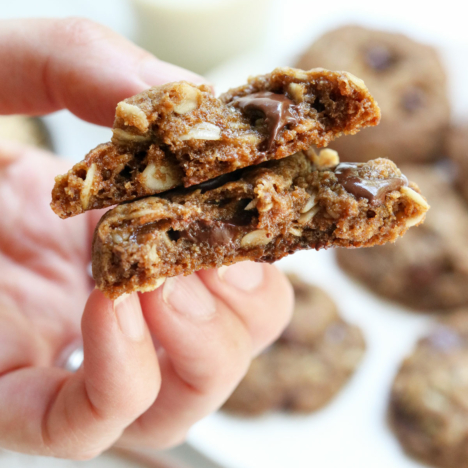
Not all lactation cookies are created equal. If you’re looking for a cookie recipe that uses less refined flour and sugar but still tastes like a delicious treat, this one is for you.
I’ve spent weeks experimenting with this recipe to make it as nourishing as possible without compromising the flavor. I’ve learned that brewer’s yeast comes in different varieties, so read my notes below and avoid the mistakes I made during testing.
(This will help you avoid gross-tasting cookies!)
I love these cookies so much that even though I’m no longer nursing my babies, I still can’t resist taste-testing them when I make a batch. They are my go-to gift for new moms and freeze beautifully for a late-night breastfeeding snack.
⭐⭐⭐⭐⭐ Featured Review
“I had made another recipe that I’d gotten from my lactation consultant that I really did not like at all. These are SO GOOD.“
-Angelina
Jump to a Section:
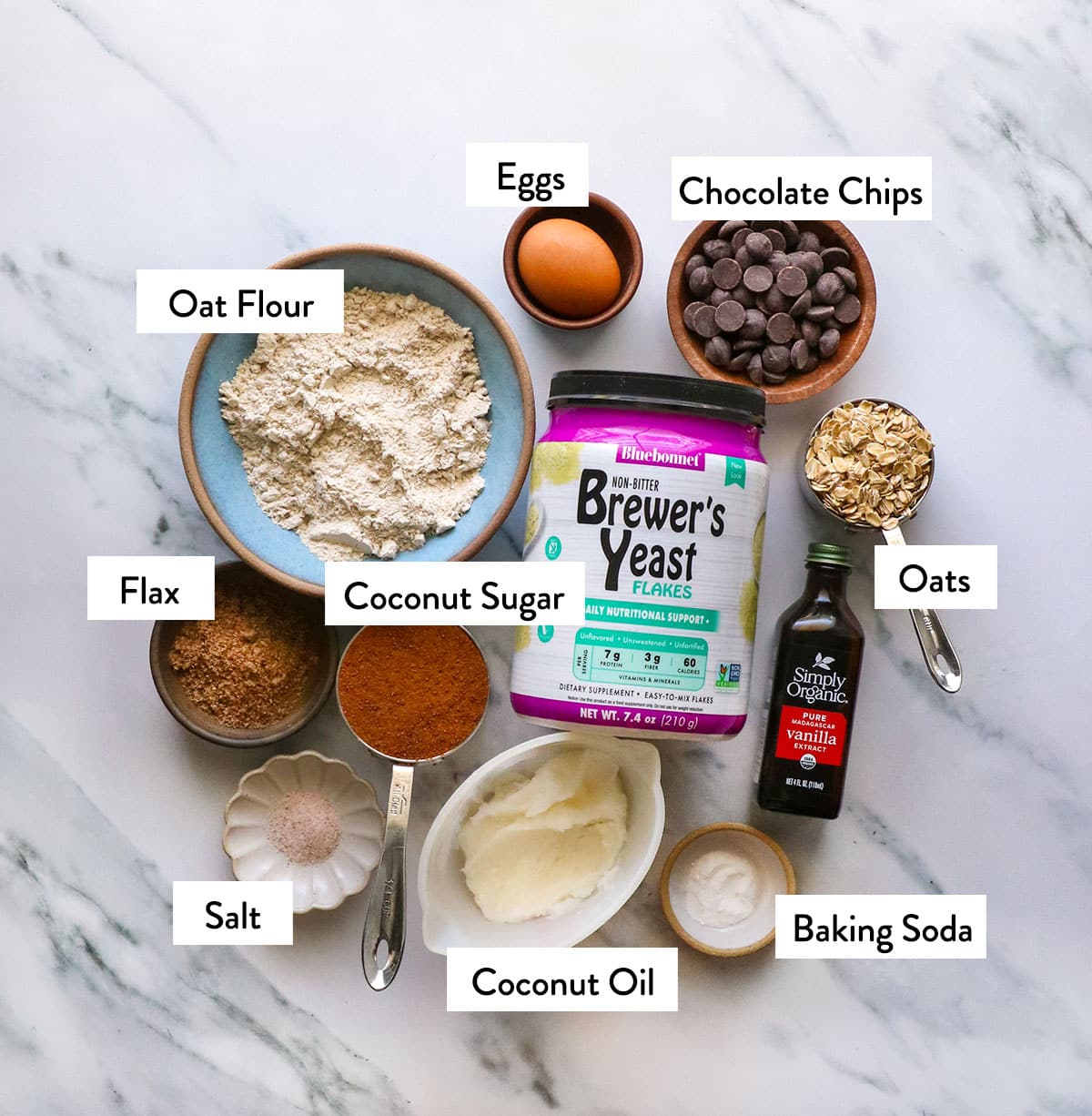
Ingredients for Lactation Cookies
- Oat Flour and Rolled Oats. Since oats may help with milk production, these cookies get a double dose! First, use oat flour (ground oats) and add extra rolled oats for texture.
- Brewer’s Yeast. Brewer’s yeast also has a reputation for boosting milk production, but it can taste unpleasant. Look for “de-bittered” on the label when shopping for this ingredient. This product is available in powder or flakes, and I find the flakes to be the most neutral in flavor; however, either option will work for this recipe.
- Coconut Oil. This recipe uses coconut oil instead of butter because it has medium-chain fatty acids, including lauric and capric acid, which may help boost both mom’s and baby’s immune systems. (source) For the most neutral-flavored cookie, use refined or expeller-pressed coconut oil, which has zero coconut flavor. If you use virgin coconut oil, it will impart a subtle coconut flavor.
- Ground Flax. This ingredient is also known to support lactation, so we add it to the cookies as a substitute for some of the flour typically found in a regular cookie recipe. (It also adds bonus fiber!)
- Egg. The egg adds protein and helps bind the cookies together. If you need an egg-free option, you can use a flax egg as a substitute; however, the cookies will be slightly softer and more fragile.
- Coconut Sugar. This granulated sugar is a great alternative to white sugar. It has a similar flavor to brown sugar and will help the cookies spread as they bake. (If you try to use less sugar, the cookies won’t spread as much.)
- Pantry Staples. Vanilla extract and salt complement the flavor in these cookies, while baking soda helps them spread evenly. Use fresh baking soda for best results, as old baking soda may prevent these cookies from rising and spreading as much.
Food Allergy Tip
These lactation cookies are dairy-free and gluten-free when made with a certified gluten-free brewer’s yeast and gluten-free oat flour. You can also make your own homemade oat flour, if you need to. It’s a great way to sneak more oats into these cookies.
How to Make Lactation Cookies (Step by Step)
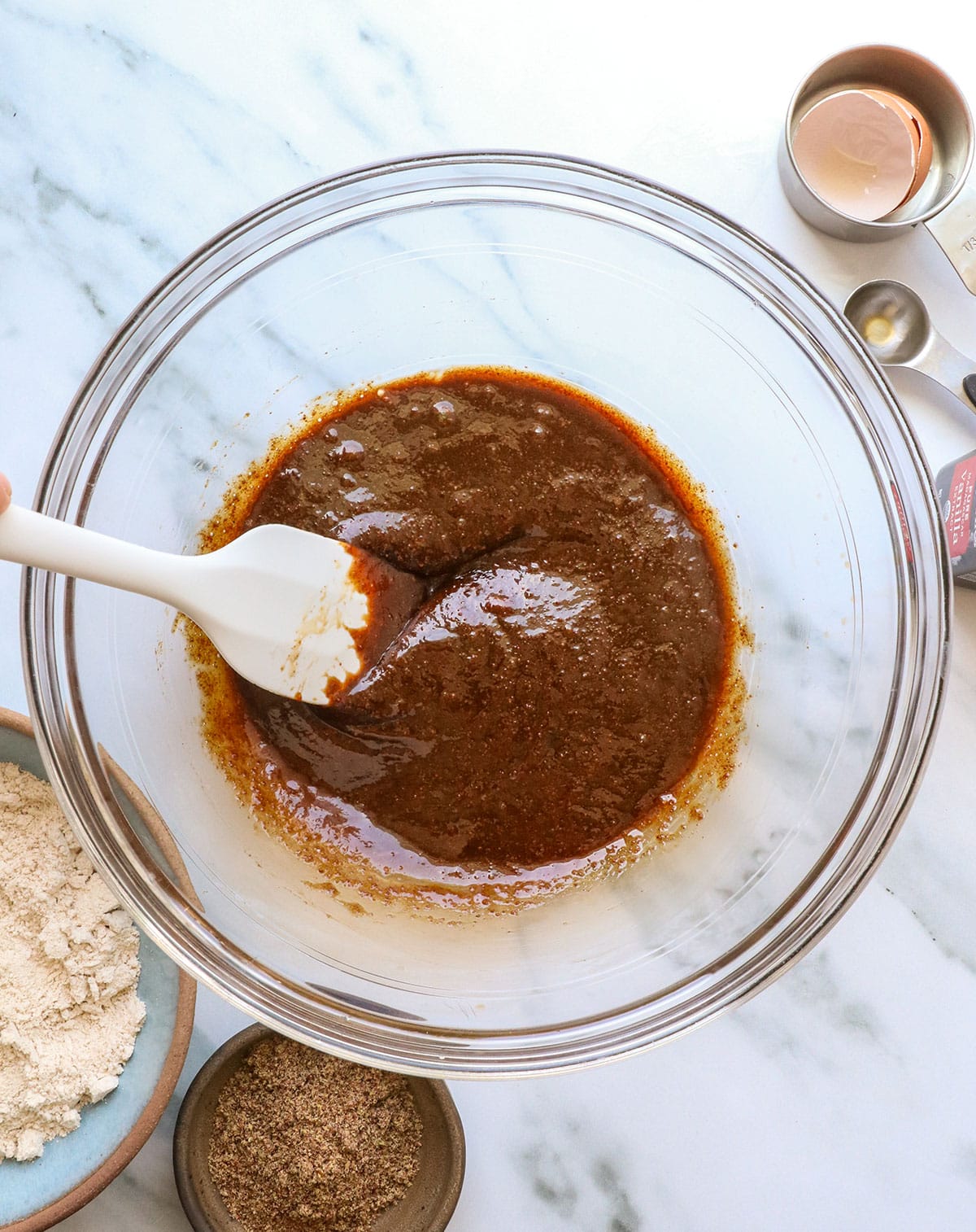
- Preheat the oven to 350ºF and line a large baking sheet with parchment paper. In a large bowl, combine 3/4 cup coconut sugar, 1 large egg, 1/3 cup melted coconut oil, and 1 teaspoon of vanilla extract. Stir well.
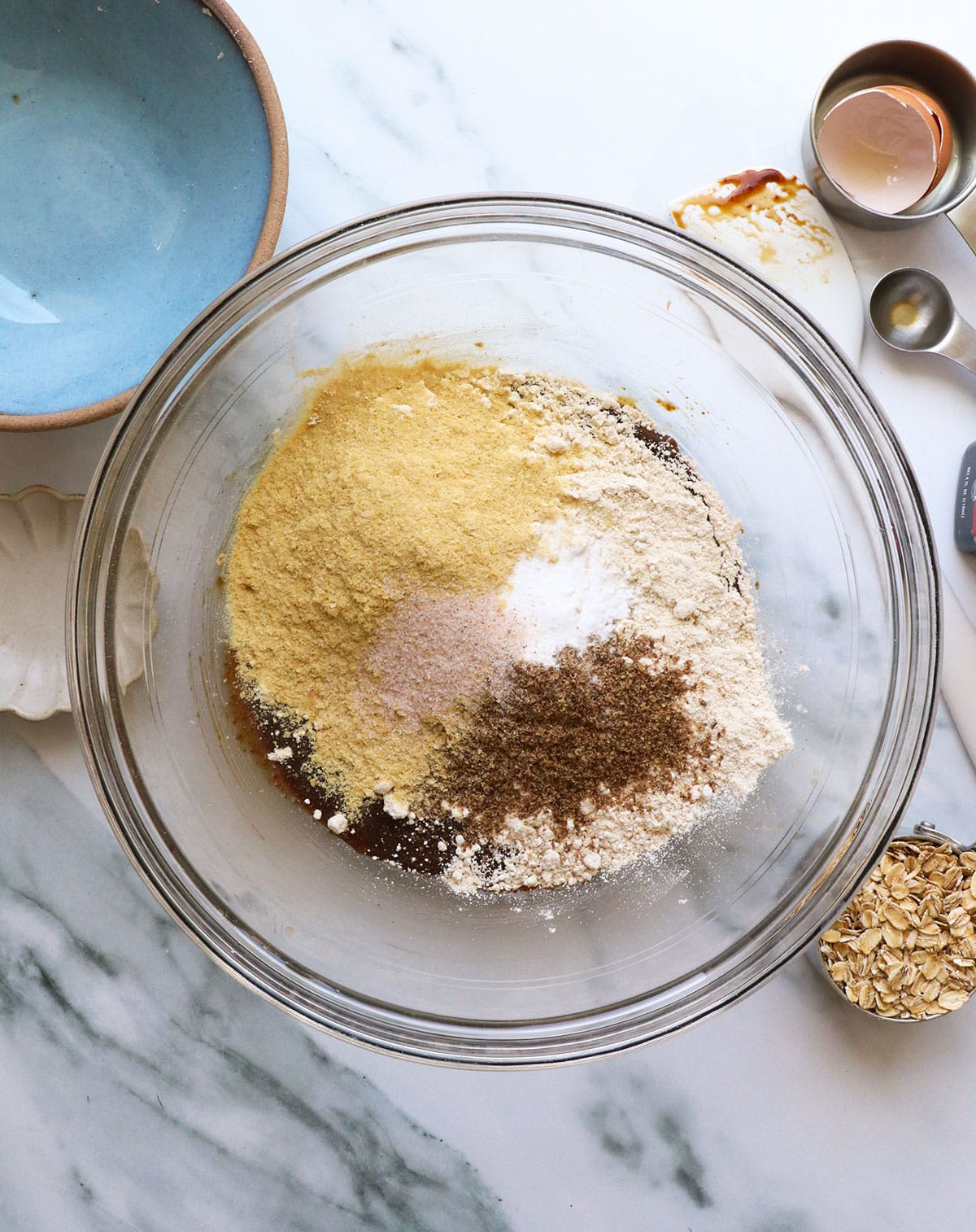
- To the wet ingredients, add 1 cup oat flour, 2 tablespoons ground flax seeds, 1/4 cup de-bittered brewer’s yeast, 1/2 teaspoon baking soda, and 1/2 teaspoon fine sea salt.
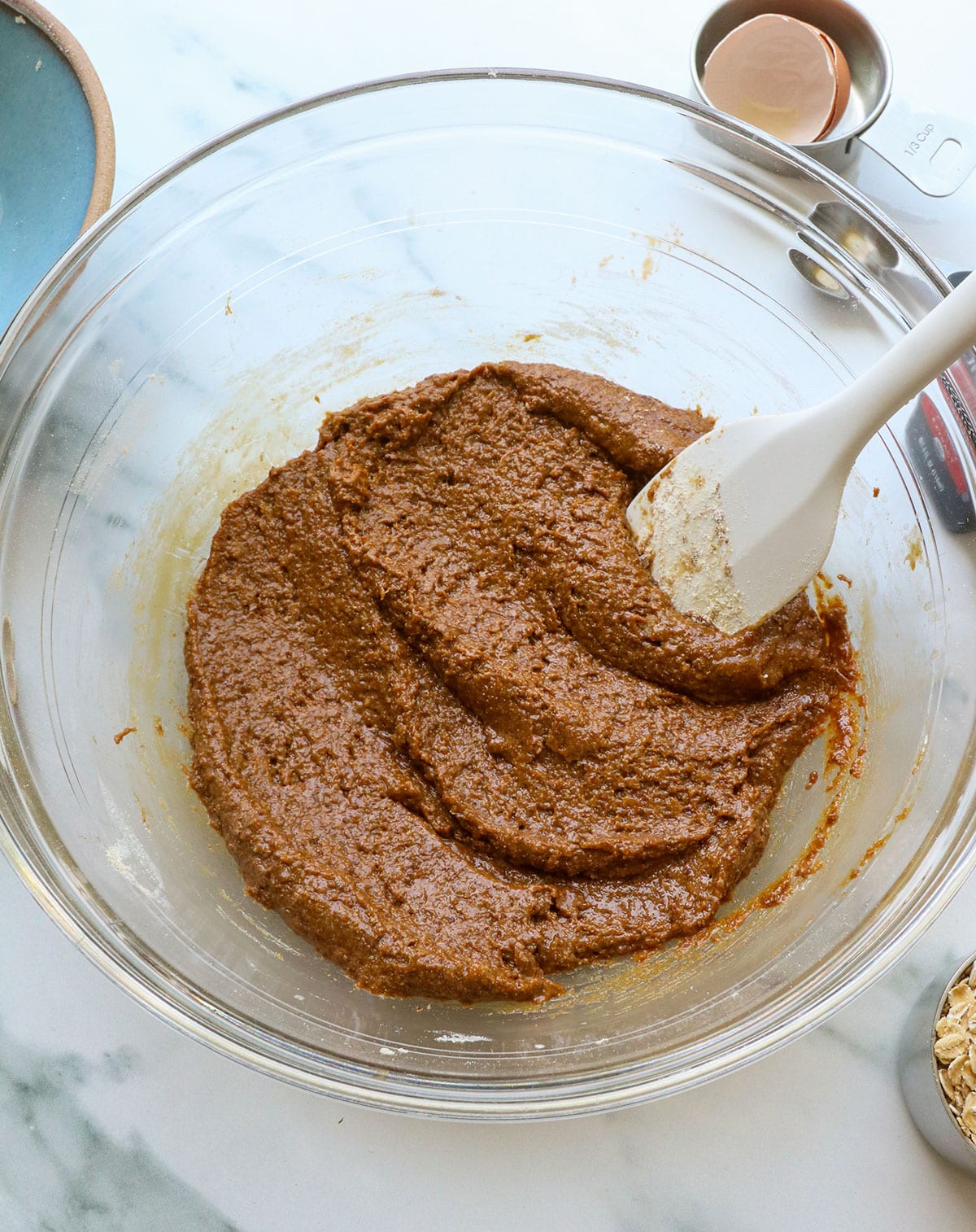
- Mix well until the cookie dough looks almost glossy. It won’t be as stiff or thick as regular cookie dough.
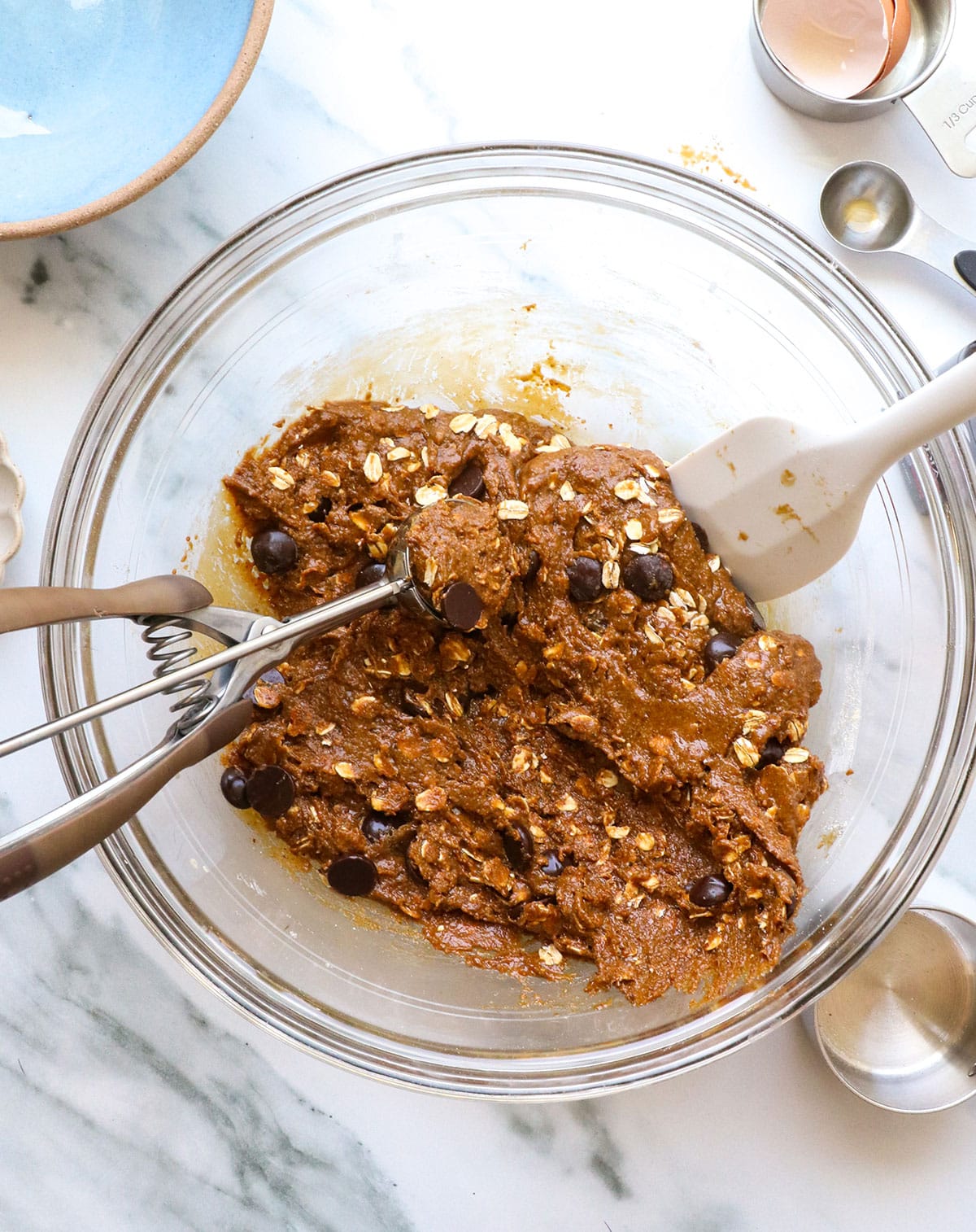
- Fold in 1/2 cup each of rolled oats and chocolate chips.
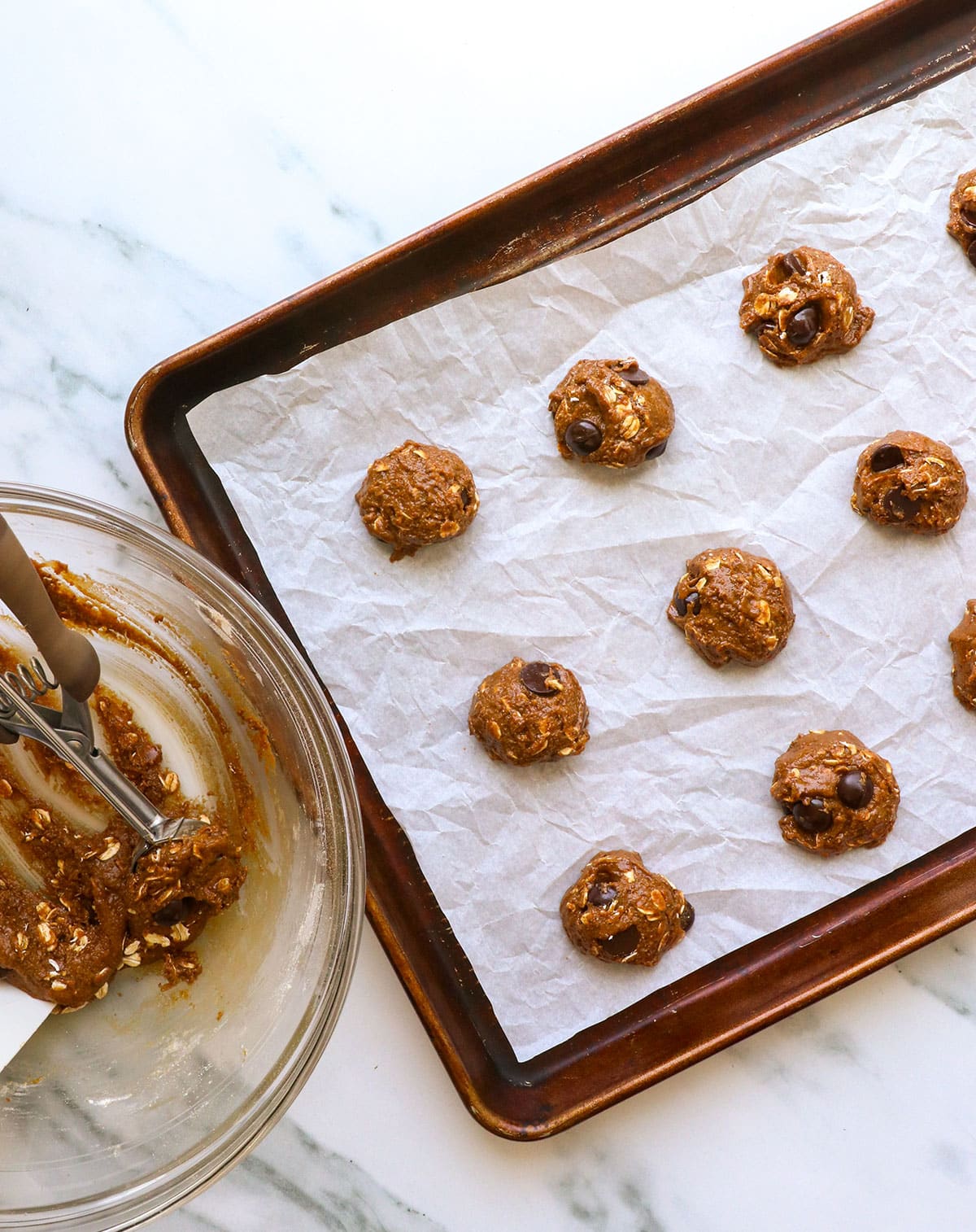
- Use a tablespoon or cookie scoop to drop the cookie dough on the parchment-lined baking sheet. Keep the balls 2 inches apart to allow them to spread. Bake at 350ºF for 8 to 10 minutes.
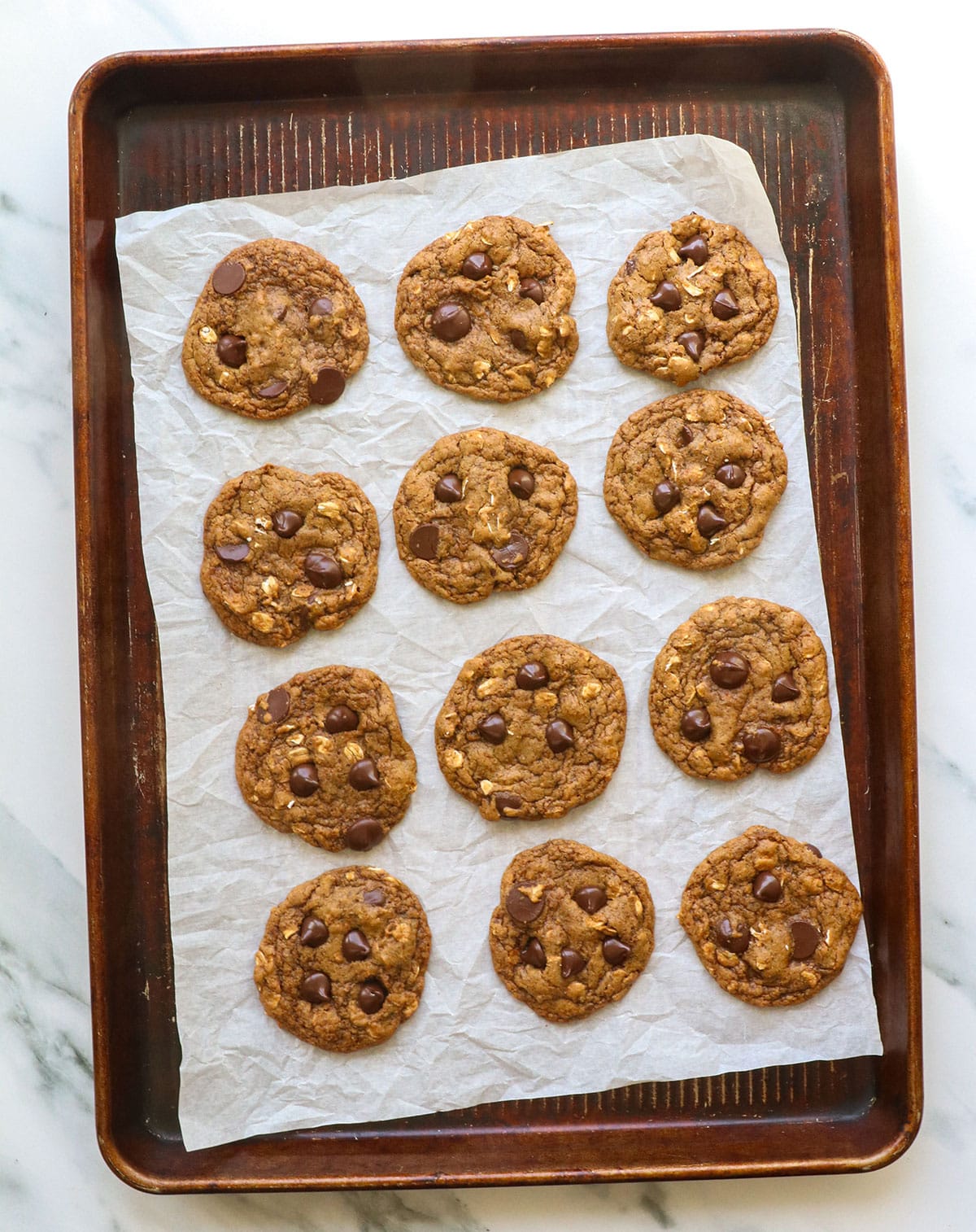
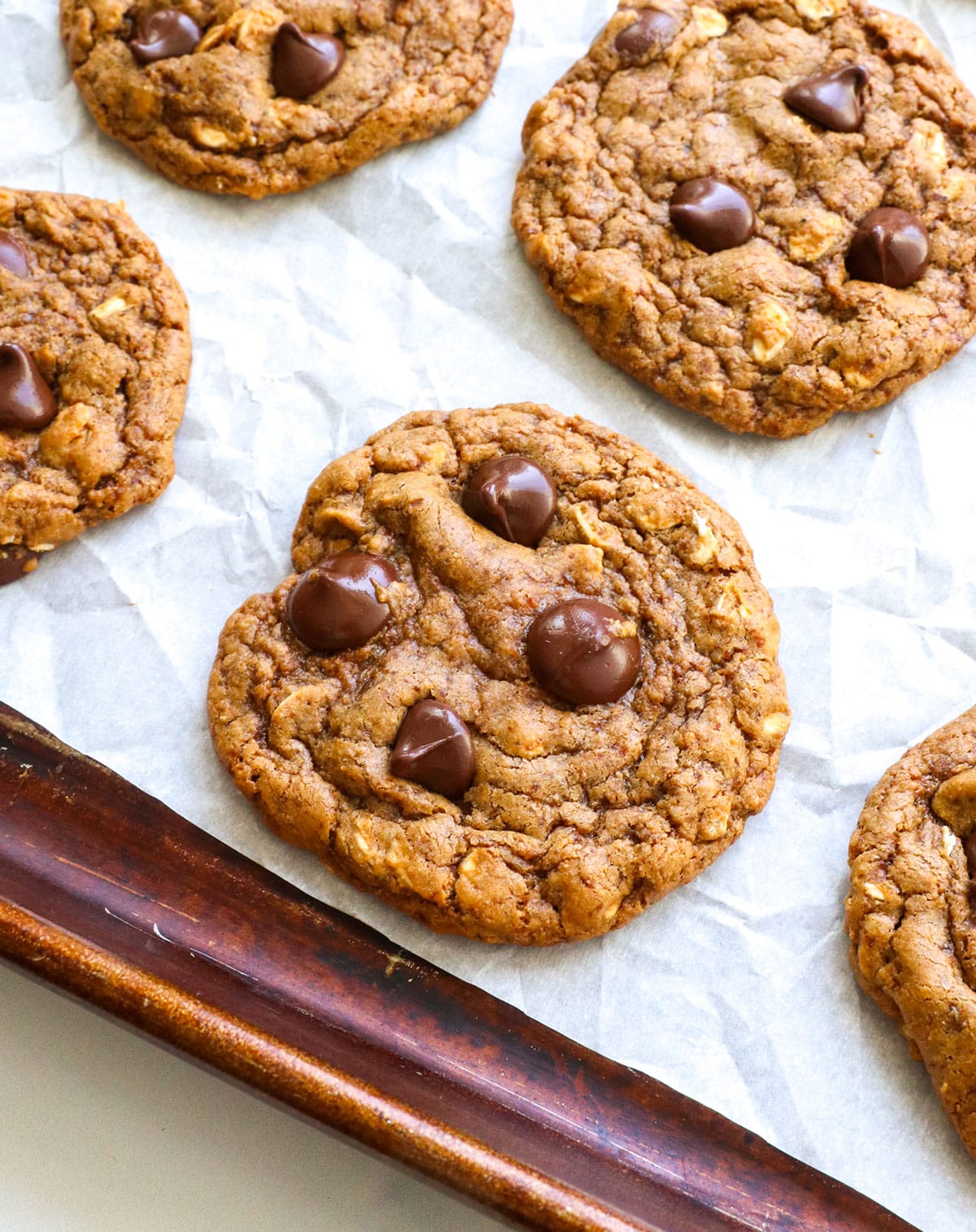
- When the timer goes off, remove the pan from the oven and let them cool completely. The cookies will feel fragile when warm, but they will firm up as they cool. Then enjoy!

The Best Lactation Cookies You’ll Ever Make
Ingredients
- ⅓ cup melted coconut oil (see notes)
- ¾ cup coconut sugar
- 1 large egg (or 1 flax egg; see notes)
- 1 teaspoon vanilla extract
- 1 cup oat flour (certified gluten-free, if needed)
- 2 tablespoons ground flax seeds
- ¼ cup debittered brewer's yeast (see notes)
- ½ teaspoon baking soda
- ½ teaspoon sea salt
- ½ cup old fashioned oats
- ½ cup chocolate chips
Instructions
- Preheat the oven to 350ºF and line a large baking sheet with parchment paper. In a large bowl, combine the coconut oil, sugar, egg, and vanilla and mix well.
- Add in the oat flour, ground flax seeds, brewer's yeast, baking soda and salt, and stir again until a thick batter is formed. It may take a few minutes of stirring to incorporate the dry ingredients evenly. Fold in the oats and chocolate chips. (Do not taste-test the batter at this point.)
- Use a 1-ounce cookie scoop or tablespoon to scoop the dough and drop it onto the lined pan, about 2 inches apart to allow for the cookies to spread. You should get 18-20 cookies from this recipe, so you'll need to use 2 pans, or bake in 2 separate batches. Bake at 350ºF for 8 to 10 minutes, until the cookies have spread and are lightly golden around the edges.
- When the cookies are done baking, let them cool on the pan for at least 15 minutes before serving. Once they have totally cooled to room temperature, you can store them in an airtight container in the fridge for up to a week. Or, freeze them for up to 3 months, if you want to make a double-batch.
Notes
- Use coconut oil that is labeled “refined” or “expeller pressed” if you want a cookie with zero coconut flavor. You can also replace the coconut oil with a 1/2 cup of softened butter, if you prefer.
- To make a vegan lactation cookie, replace the egg by adding an extra tablespoon of ground flax seed plus 3 tablespoons of water to make a flax egg substitute.
- Brewer’s yeast can taste VERY bitter and ruin the flavor of your cookies. Look for non-bitter or debittered yeast for the tastiest results. (I most recently tried Blue Bonnet’s brewer’s yeast flakes, which have no bitter flavor.) You can also try using nutritional yeast instead, or replace this with a scoop of unflavored protein powder or an extra 3 tablespoons of oat flour, for a similar texture.
- If you are gluten-intolerant be sure buy certified gluten-free oats. If you cannot find a brewer’s yeast that is certified gluten-free, try using nutritional yeast instead, which is thought to have similar properties for milk production.
Nutrition
More Recipes to Try
If you try this lactation cookie recipe, please leave a comment and star rating below letting me know how you like them.







The dough tasted amazing, but when I baked it they did not flatten and were hard/dry. I’m still keeping them though! Maybe they were hard because instead of adding the whole oats I added vanilla protein powder for the difference? Everything else was the same. I made a version of this recipe without the eggs to make lactation balls and they were delicious. I again resided the whole oats for chocolate protein powder and added raisins.
Hi Elise! Yes, protein powder is much more dense than rolled oats, so making that substitution would probably account for the drier texture. But, I’m glad they still tasted good!
I tried substituting oat flour for almond flour and chia seeds for ground flax seed (I hear that flax seed lowers estrogen? Idk haha) and they turned out super flat! The flavor tasted great but just the saddest little cookie puddles I’ve ever seen! Should I have measured differently?
Hi Jamie! Swapping the oat flour for almond flour adds more fat to this recipe, and that would result in very flat cookies. Check out my almond flour cookie recipe if you want a recipe that has been developed to work with almond flour, instead!
I’ve made these once and they tasted great but spread and were really flat. Do you have a high altitude baking suggestion or maybe scoop and freeze might work?
These spread and filled the cookie sheet into one single very flat cookie. I’m wondering if the updated recipe is correct – your old recipe had two cups of oat flour and this one only has 3/4 cup? I think it needed a lot more flour to hold its shape maybe?
I’m so sorry about that, Kaela! I re-tested this recipe and slightly increased the flour amount to help reduce the risk of the cookies spreading. Since this recipe includes other ingredients, like ground flax and brewer’s yeast, they also bulk up the cookies without needing as much flour. Let me know if you give this new version a try, and thank you so much for your feedback.
Any chance you’ve tried replacing the sugar with date paste? Any tips before giving it a try, if not?
Sooo good!
I made this recipe 3x and it is absolutely amazing BUT need some help troubleshooting. Context: I have gallbladder disease that I manage with my diet and coconut oil is my #1 trigger food for an attack. So the first time I made this recipe, I thought, for such a large batch of cookies, 4 tbs is not that much. I was wrong. The second time I made the recipe I omitted the coconut oil and opted to add 4 more tablespoons of butter. And still found myself in considerable pain. So then I tried with vegan butter, to no avail.
I have given away each batch of these cookies. But I need lactation support and I’m starving in the middle of the night and these cookies are perfect for 2 am with some oat milk!
I have to keep my saturated fat under 3g (15%) and even though 4g doesn’t seemed to me like it makes all that much difference, it does. I so badly want to make this recipe work cuz the cookies are sooooo goooood! Do you have any suggestions for substitutions that may get the sat fat content 3g or less? I’m not a baker and these three batches have cost a fortune!
I have made this for my daughter after häving both her boys fitche years apart and today I’ve made them for my daughter in law who gave us a beautiful boy 2 weeks ago. The new version is better, thanks for that. I also add 2 teaspoons of cinnamon to each mix. I make double mix in 2 bowls, we all enjoy these biscuits, few actually make it to the freezer. Thankyou for sharing.
I loved the original recipe. It was my go to with my 1st child & had been again with my 2nd. I was worried about the new recipe not going to lie, but happy to say they are even better!!!
I’m so glad you enjoyed the new recipe, Sarah. Thanks for letting me know!!
I saw the updated recipe last week and have already made a second batch. I don’t have the brewers yeast so I did replace with more oat flour and I really like it. Make sure you use a good quality choc chip for taste. Also, a great recipe for someone looking to use a gluten free flour