
This post may contain affiliate links. Please read my disclosure and privacy policy.

All you need are two ingredients—almonds and water—plus a few minutes of effort to make almond milk. The hardest part of this recipe is cleaning the equipment when you’re done!
You could probably use any recipe online and end up with something that tastes better than the store-bought version. What makes my version special is how many times I’ve experimented with it.
As a result, I can show you how to adjust the flavor, the creaminess, and even how to skip the extra equipment to streamline the process. Be sure to read my extra tips below!
⭐⭐⭐⭐⭐ Review
“I was skeptical at first because I’ve honestly never made almond milk before!! I can’t believe how easy it is and it’s delicious!!! I am using it as my coffee creamer!” – Jeanette
Homemade Almond Milk Ingredients
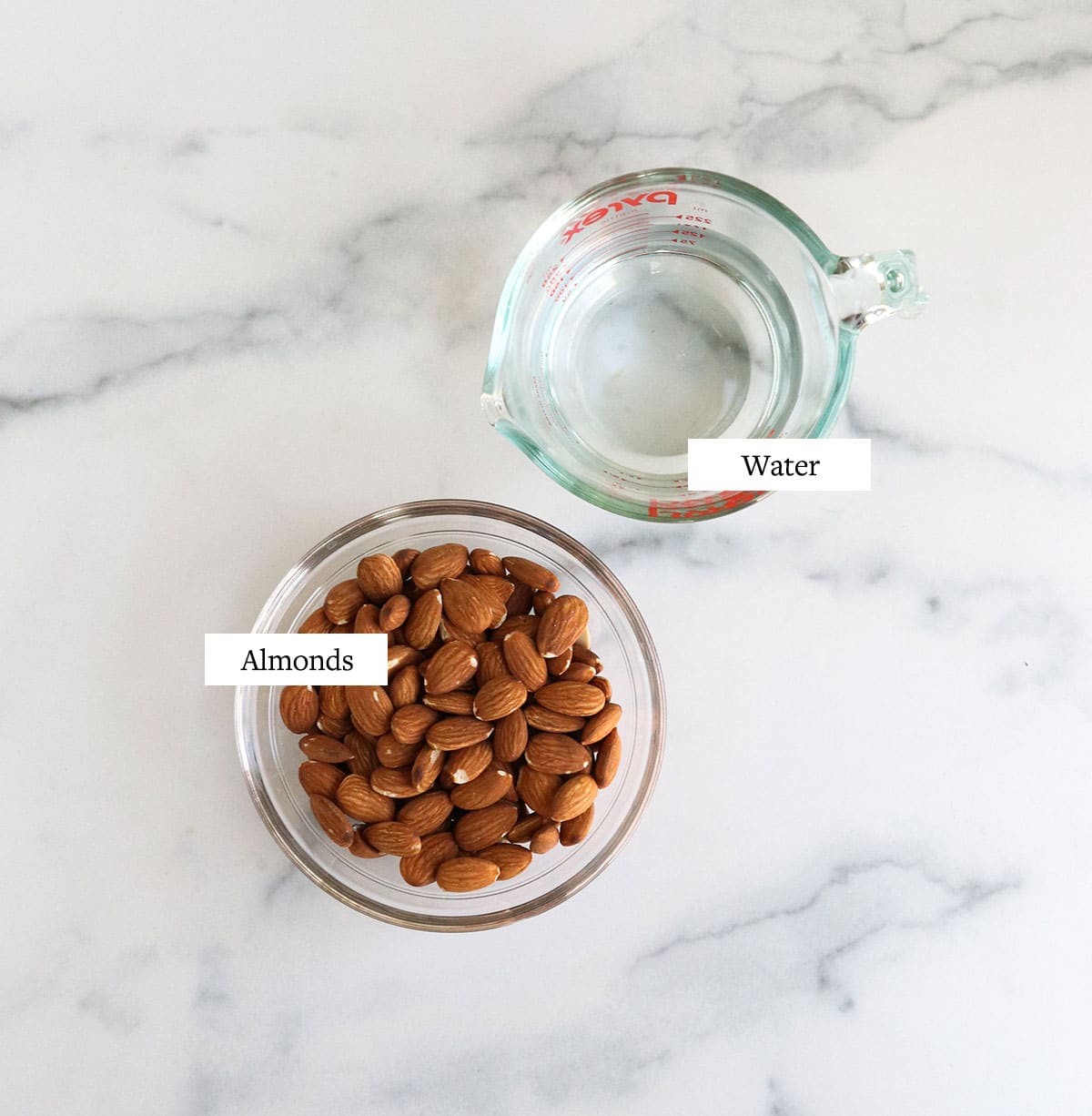
You only need two ingredients to make almond milk:
- Almonds. I tend to use almonds that are not roasted or salted so that the almond milk will have a neutral, mild flavor. However, roasted nuts will work as well. There’s no need to buy blanched almonds (with skins removed), since you’ll be removing the pulp later anyway.
- Water. This is the liquid used for blending this dairy-free “milk.”
You can also make it more flavorful by adding a teaspoon of vanilla extract, 1-2 tablespoons of maple syrup, or up to 4 pitted Medjool dates for sweetness. For a richer consistency, you can also add up to a tablespoon of coconut oil.
Try my Vanilla Almond Milk and Chocolate Almond Milk for flavor variations.
How to Make Almond Milk
Step 1: (Optional)
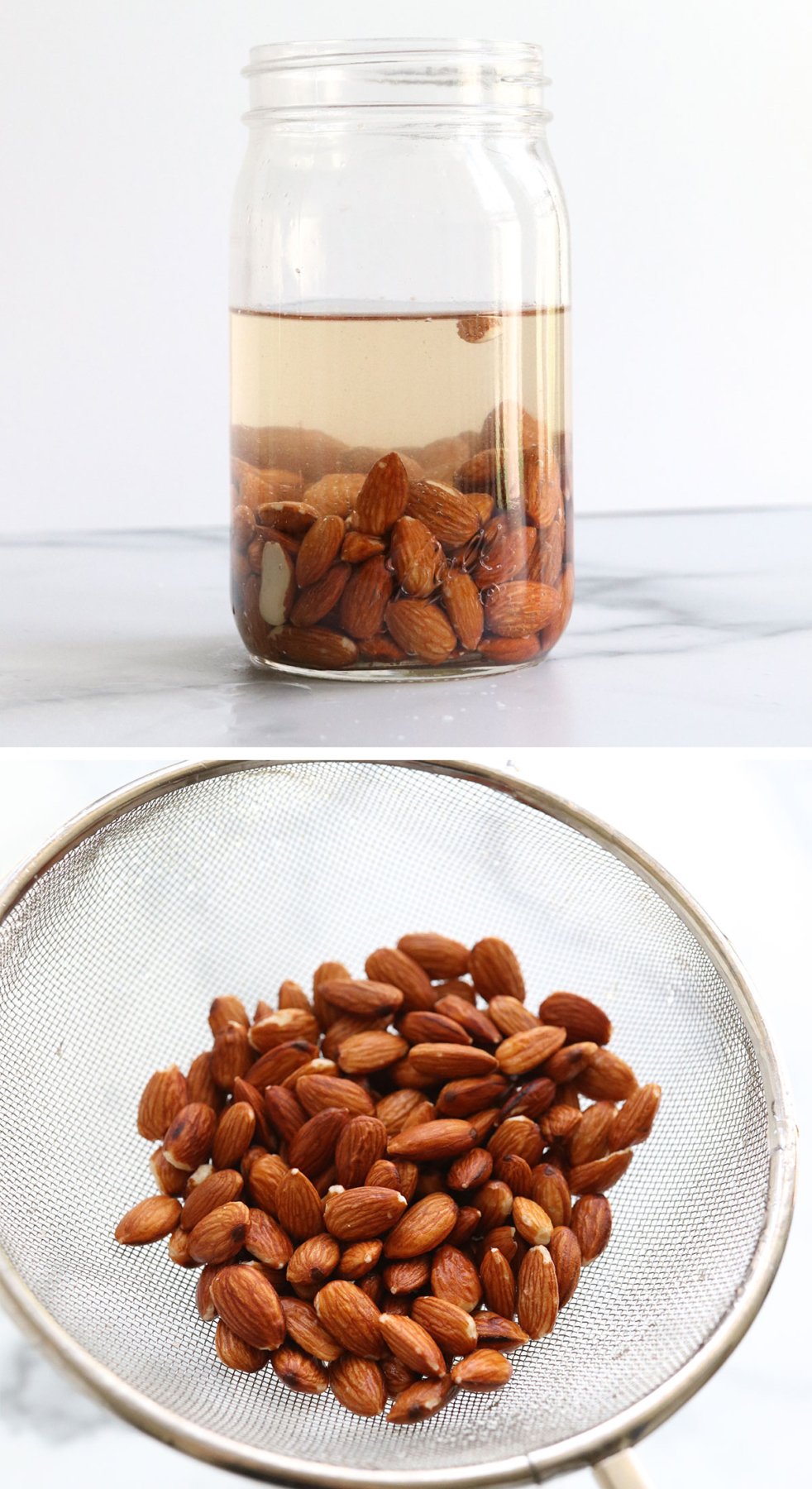
Soaking almonds ahead of time can make them softer and help them break down more easily in your blender. Research doesn’t necessarily support the idea that soaking nuts improves digestion or reduces anti-nutrients, so this step is mostly helpful if you don’t have a powerful blender.
To soak almonds, add them to a large jar or bowl and cover with at least 2 inches of water. This allows room for them to expand as they soak. (I usually use 2 cups of water to cover 1 cup of almonds.)
Let them soak for up to 8 hours, then drain away the soaking water by pouring the almonds into a fine mesh strainer.
Step 2:
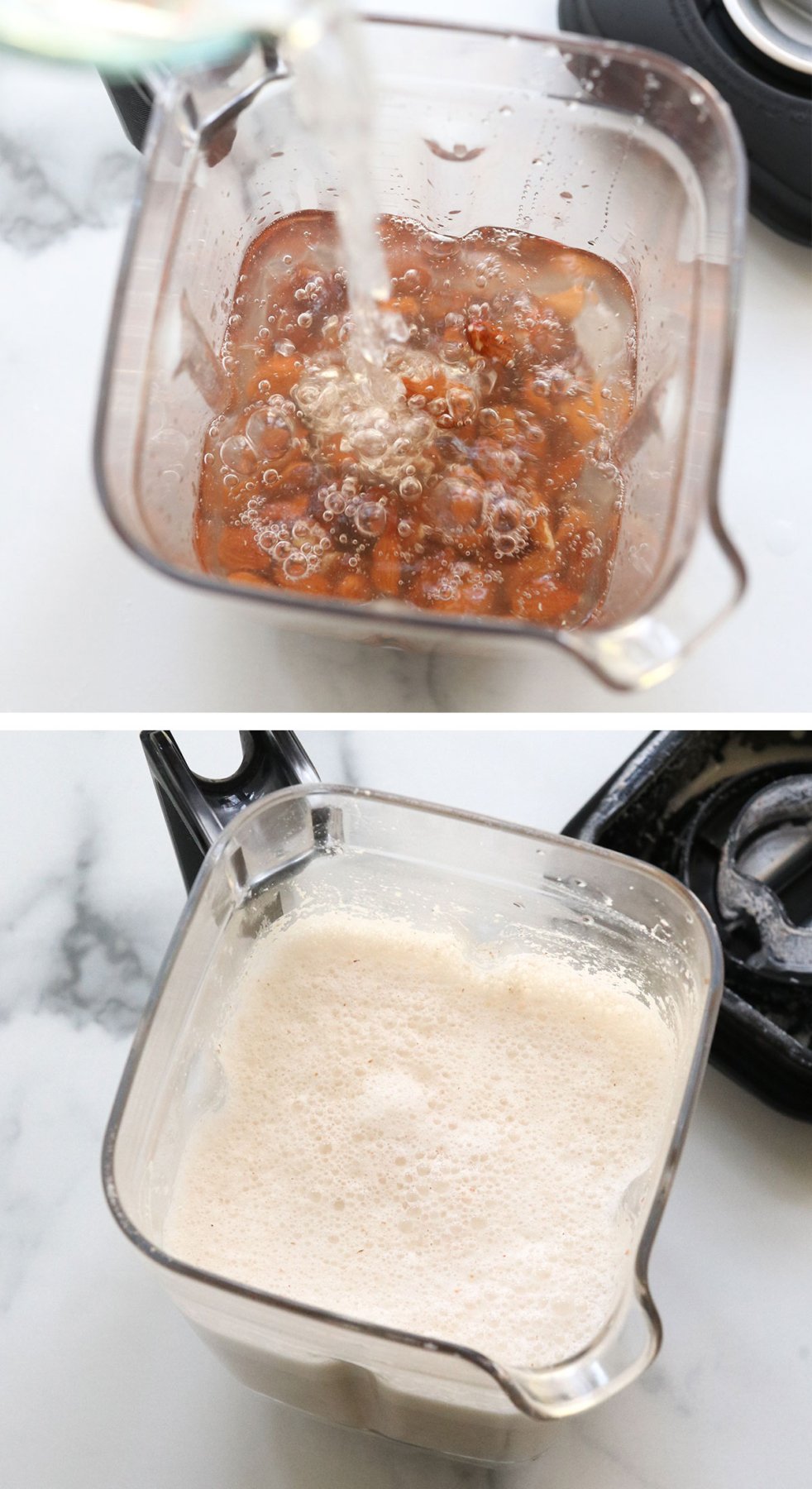
Whether you soaked the almonds or skipped that step, add the almonds to a high-speed blender, along with 4 cups of fresh water. Secure the blender’s lid and blend until the almonds are broken down and the mixture looks creamy, about 60 to 90 seconds.
There should be almost no visible almond pieces when the blending is complete.
Step 3:
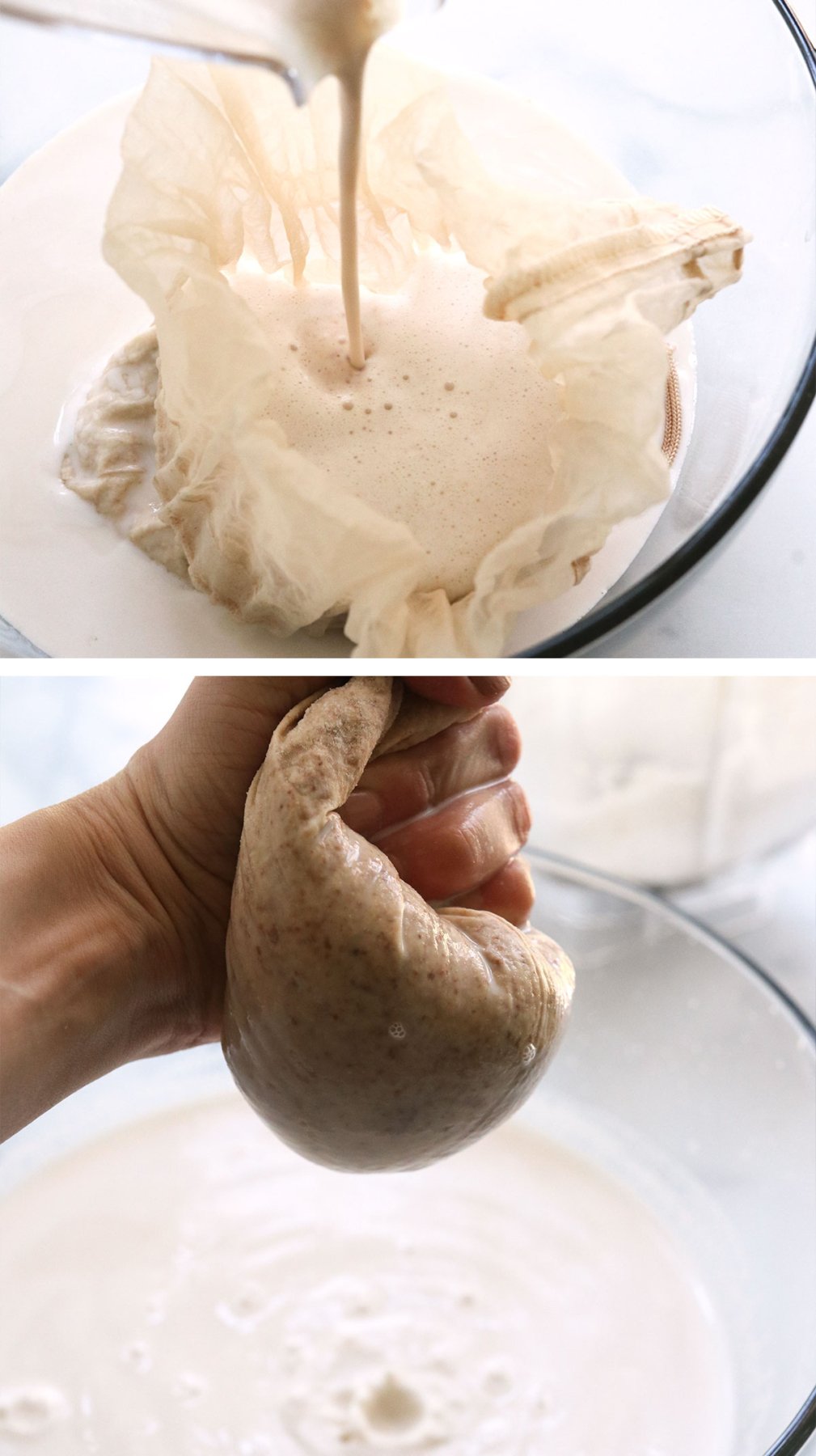
Arrange a nut milk bag or cheesecloth over a large bowl, then pour the blended almond mixture into the bag.
Carefully squeeze the bag to remove as much liquid as possible from the almond pulp.
Detoxinista Tip
If you don’t have a nut milk bag, make Almond Butter Milk instead. (It takes about 1 minute with no straining.)
Almond Pulp Recipes
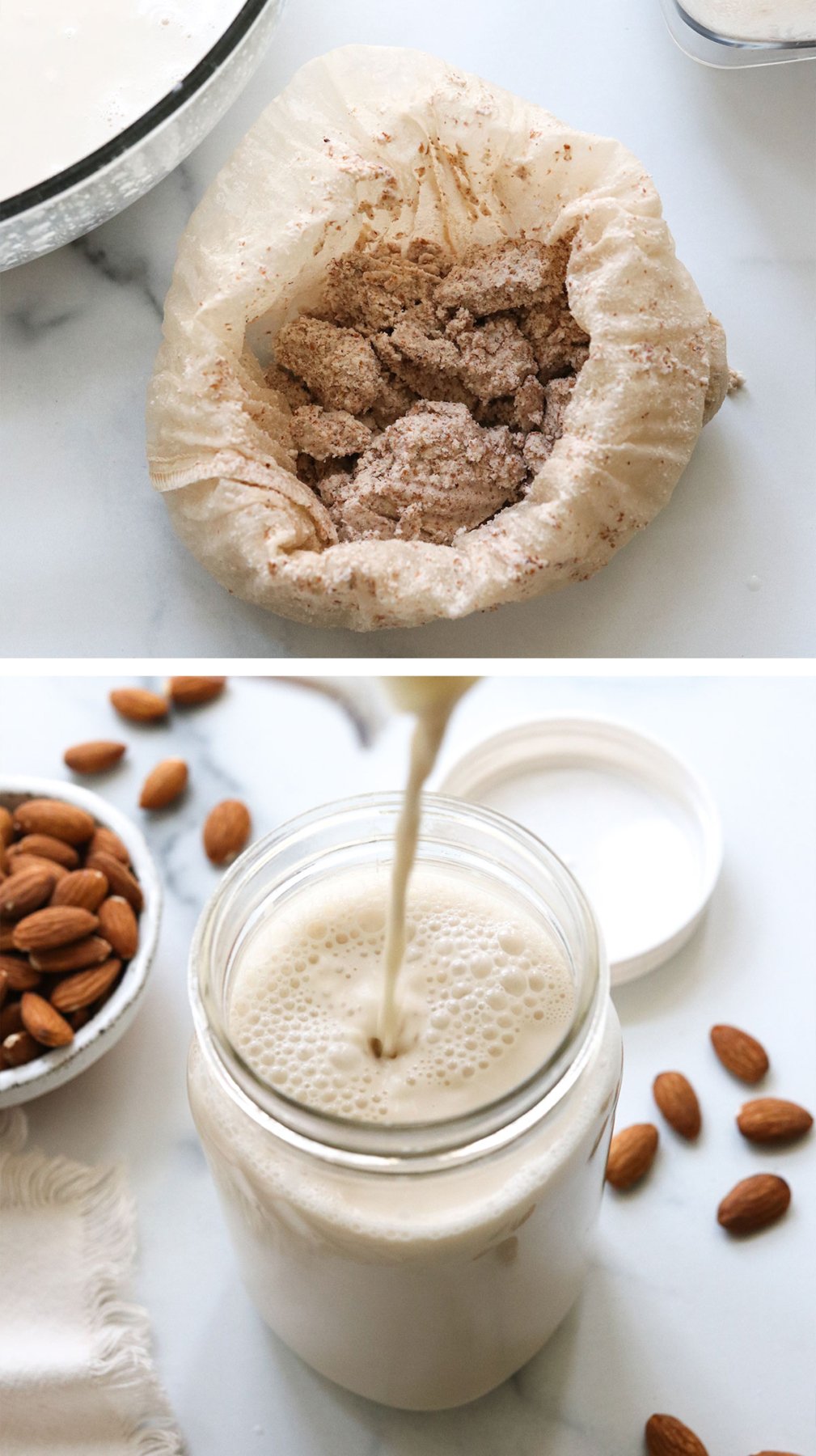
Use the leftover almond pulp to make Almond Pulp Hummus or Almond Pulp Brownies. Both of these recipes have been developed using the wet pulp immediately after making a batch of almond milk, so no extra effort is required.
Step 4:
You can use the almond milk right away, or add any extra flavorings to taste, such as vanilla, maple syrup, or a pinch of sea salt.
Note: It’s best not to add flavorings, such as vanilla or cocoa powder, before straining out the pulp. In my experience, cocoa powder can clog the bag, so you won’t get as much milk out. It also changes the flavor of the pulp, making it less suitable for use in other recipes later.
Storage Tips
Transfer the almond milk to an airtight container and store it in the fridge for up to 5 days. Or you can freeze it for up to 3 months. Because this recipe doesn’t call for preservatives, it won’t last as long as store-bought milks do. (You’ll be able to tell it’s gone off when the smell or flavor goes sour.)
Be sure to make only what you’ll drink in a week, or plan on freezing the leftovers. You can easily scale the recipe as needed!
Recipes with Almond Milk
Now that you’ve mastered making almond milk, here are some easy ways to enjoy it.
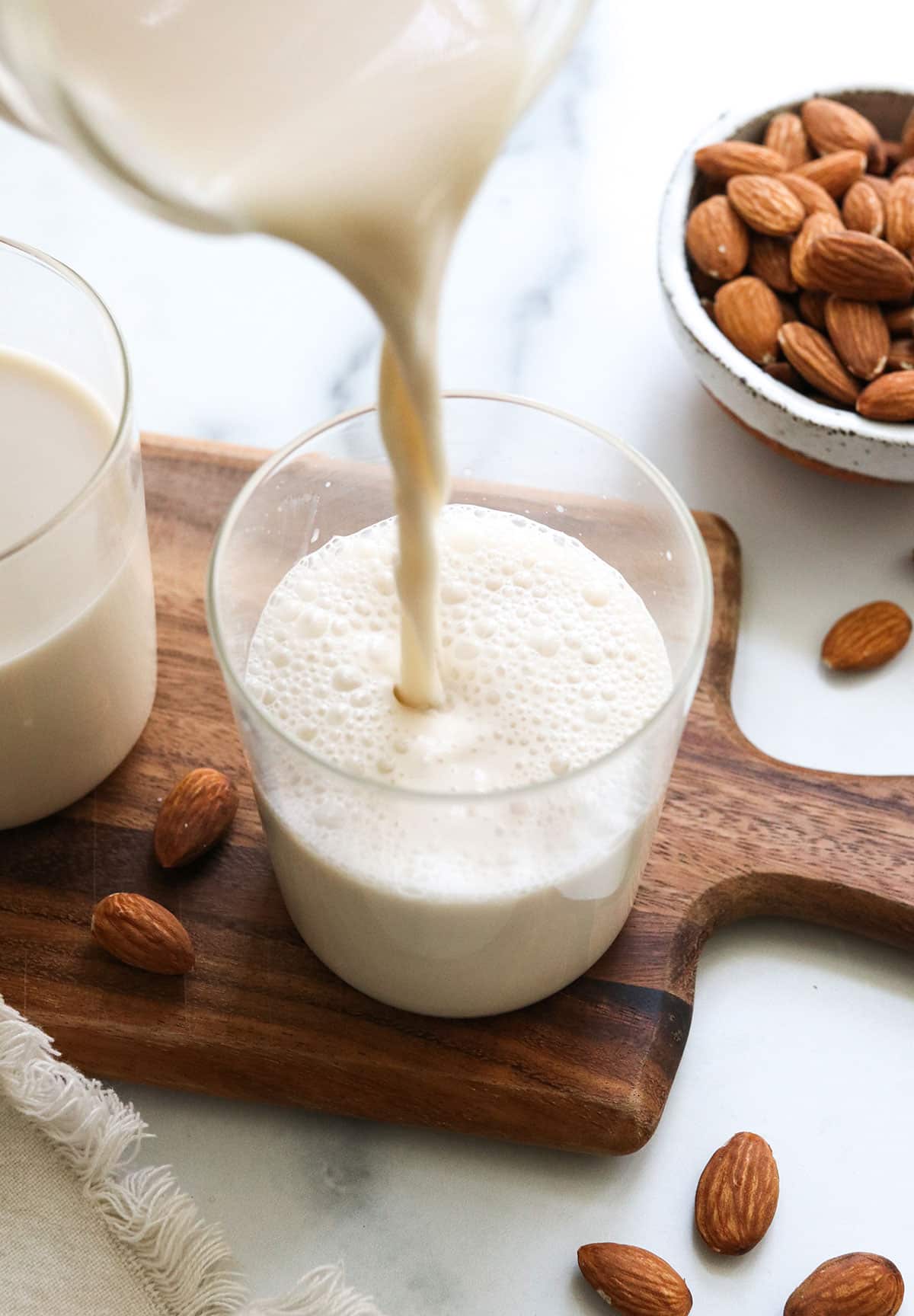
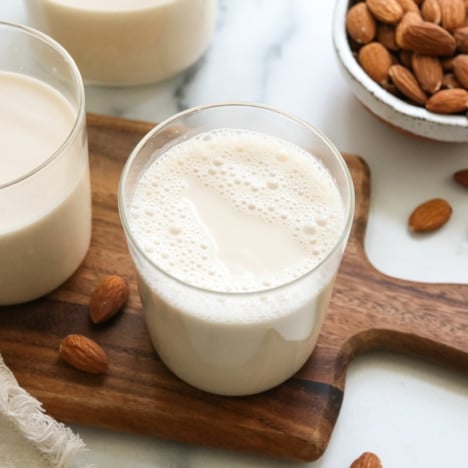
Anywhere you use regular milk, you can typically substitute it with almond milk. Homemade almond milk even creates a luxurious foam for lattes!
How to Make Almond Milk (and use leftover pulp)
Ingredients
- 1 cup almonds (not salted)
- 4 cups water
Instructions
- Optional Step: To soak the almonds before blending, cover them with 2 cups of water in a large bowl or jar, and let them soak for 4 to 6 hours. (This step may help with blending later if you don't have a powerful blender.) Drain the almonds through a fine mesh strainer before moving on to the next step.
- Add the almonds and 4 cups of fresh water to a blender. Secure the lid and blend on high-speed for at least 60 seconds, until no pieces of almonds are visible and the mixture looks creamy.
- Pour the almond milk through a nut-milk bag or cheese cloth, squeezing well to extract the milk. You can save the remaining almond pulp for another recipe (see the full post for ideas) or discard. If you would like to flavor the almond milk with vanilla or chocolate flavorings, this is the time to whisk in any additions.
- Store the almond milk in an airtight container in the fridge for up to 4 days. (You can freeze leftovers, if needed, for up to 3 months, too!)
Video
Notes
Nutrition
If you try this almond milk recipe, please leave a comment and star rating below, letting me know how you like it!







I finally got it!! almond milk that doesn’t separate in coffee. I make my milk in batches of 2 litres so I don’t have to do it everyday. So with 2 cups soaked almonds well rinsed, 8 cups of filtered water, pinch of celtic salt and 1/2 cup soaked sunflower seeds and 1/2 cup soaked sesame seeds, (those two soaked together to make it easier as sesame seeds are very small and fall through the sieve when rinsing, so they attach themselves to the sunflower seeds and I loose less) . Blended together with the almonds and water, then put through the cold press juicer to extract even more nutrients, the almond milk is now perfect, does not curd. tastes beautiful. I thought I’d share :))
Thank you for sharing!! I’ll have to try your additions next. 🙂
I was skeptical at first because I’ve honestly never made almond milk before!! I can’t believe how easy it is and it’s delicious!!! I am using my as coffee creamer!
Thank you!!
May I ask why is it necessary to discard the soaking water if it is filtered? Why not just use this same water when blending? It seems as though the original water would retain more of the nutrients. Not being critical- Just curious. Thank you-
If you want to use the soaking water for blending, you can! When I was into eating raw foods (over a decade ago!), I learned that soaking almonds helps remove phytic acid, and phytic acid may inhibit iron absorption. So, I’ve always been in the habit of discarding the soaking water and starting with fresh for blending.
Creamy , easy recipe and taste was 5 *.
Thank you
My homemade almond milk separates when used for a cup of coffee. I keep having to turn the spoon otherwise it doesn’t look too appetizing. is there any way to stop the milk from separating in the coffee?
Absolutely delish and defo so much tastier than shop bought! Thanks!
I just made this. So simple and tasty. I love the fact that it is 2 ingredients. Never buying store bought again. I Can’t wait to make the hummus. Bravo and thank you.
Very easy to make. I soak my almonds for 11 hours and used 31/2 cups of water to blend. I favored the milk with vanilla and sugar free maple syrup. I used the pulp and made almond hummus, that came out really good too!
Great idea for making hummus with leftover pulp. I will try that myself. Thanks
Can I use raw sliced almonds to make the almond milk? Would I use the same amount of nuts?
So deliciously simple!!!
If you don’t strain the pulp can you drink it as it is? is it good for you?
There is a LOT of pulp left, so the texture isn’t lovely if you leave it in. But, feel free to experiment with it! I use the leftover pulp to make Almond Pulp Hummus as a snack.