
This post may contain affiliate links. Please read my disclosure and privacy policy.

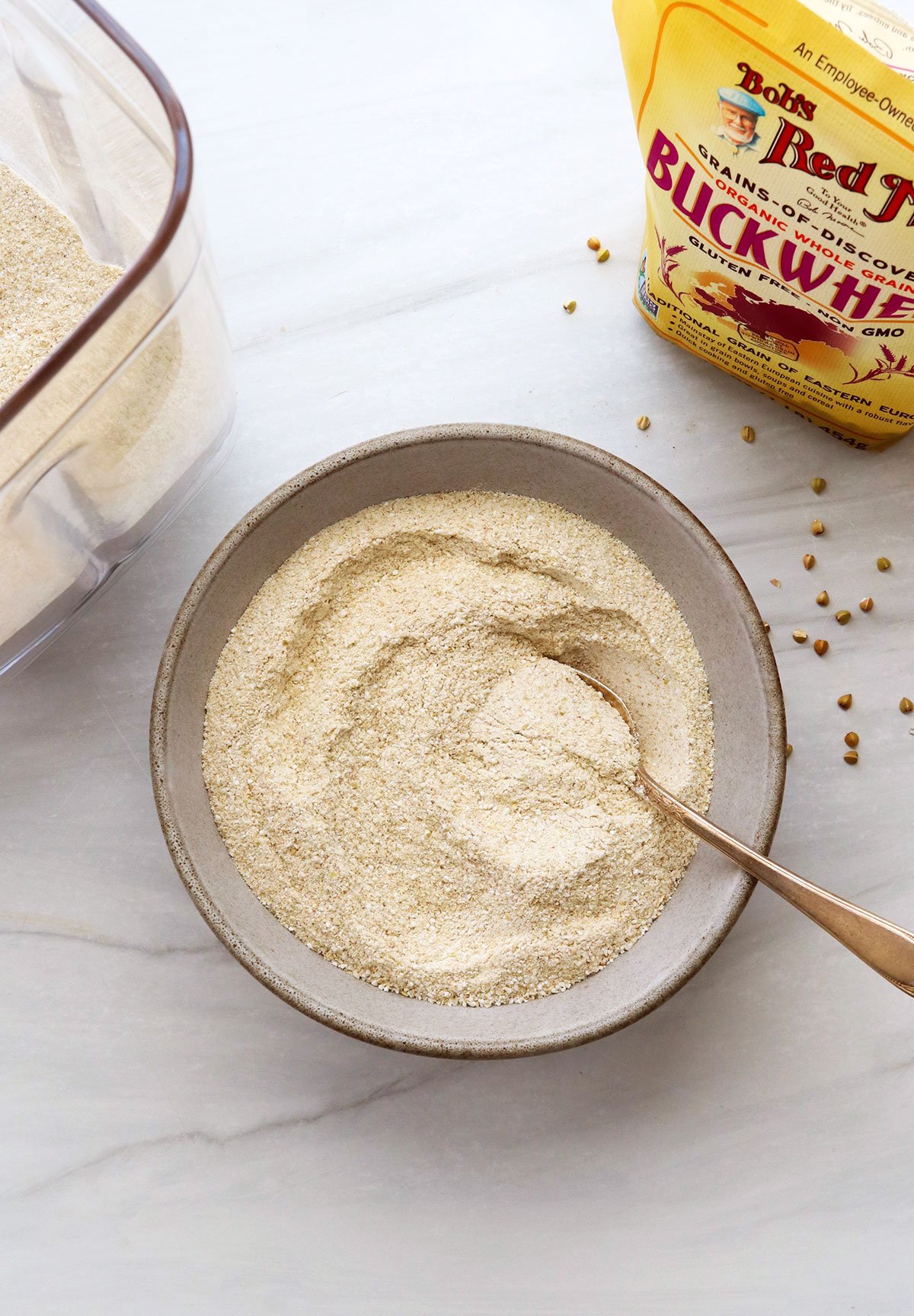
Buckwheat flour is a gluten-free substitute for all-purpose flour that’s easy to make at home. If you’ve ever bought this flour at the store, you may have gotten one that is gray in color and very bitter. I’ll show you how to make one that tastes better using a coffee grinder or blender!
Use it to make delicious chocolate buckwheat cookies, buckwheat banana bread, buckwheat waffles, and more.
What to Know About Buying Buckwheat Flour
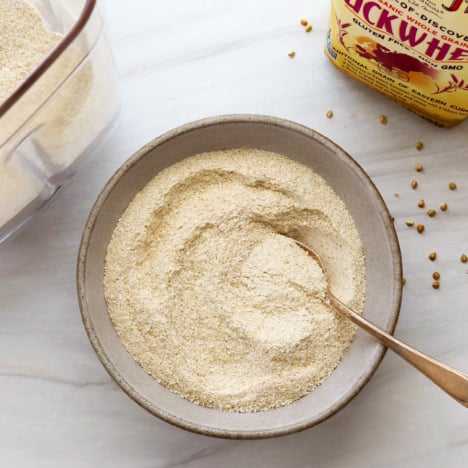
Buckwheat flour is not always consistent when you buy it at the store. Some brands will have a grayish-blue hue, which typically means the seeds were ground with their hard outer shell (also called hulls). This type of flour is usually more noticeable in flavor when it comes to baking.
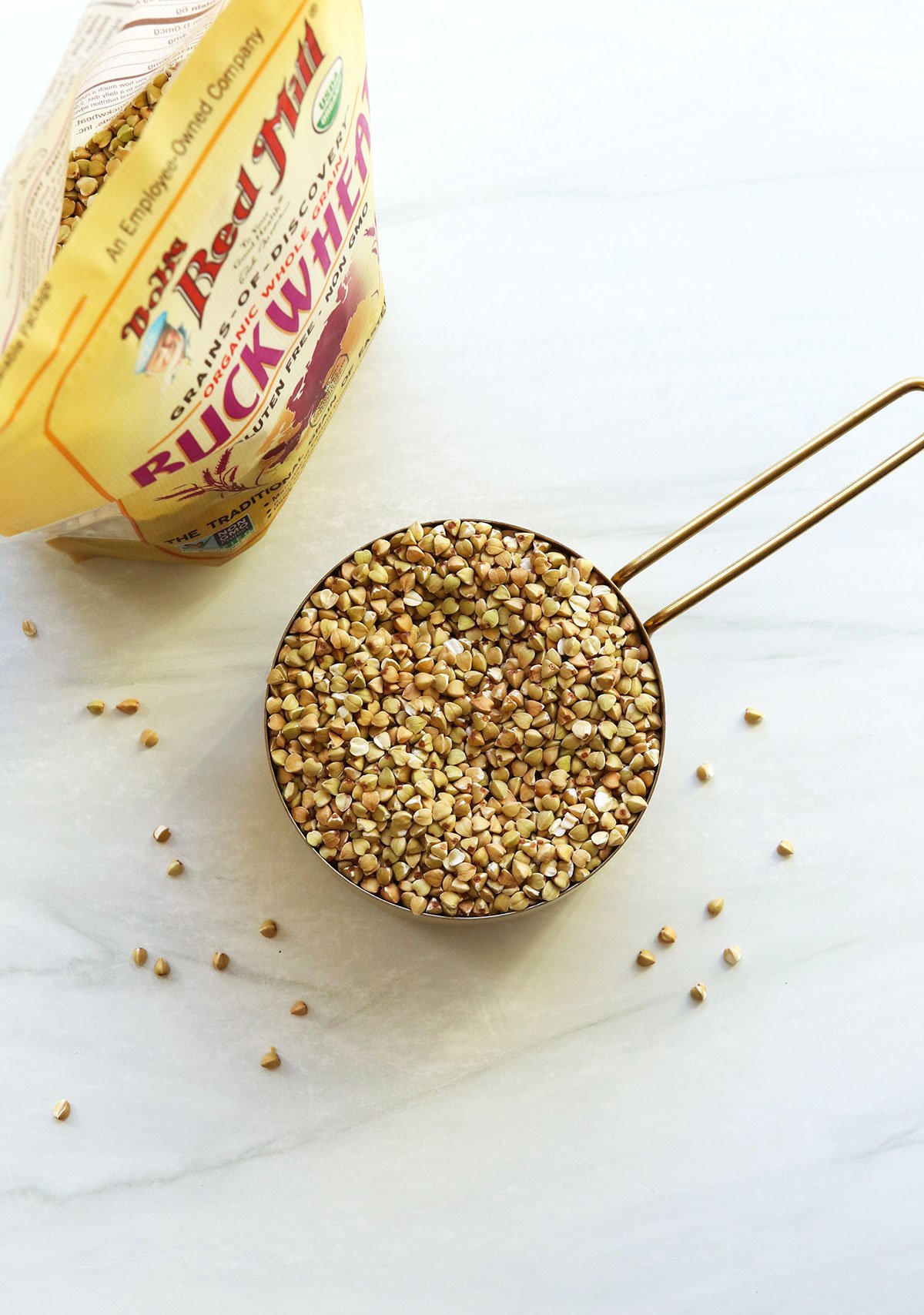
If you are hoping to use buckwheat flour in everyday baking, like making a batch of chocolate chip cookies or a loaf of pumpkin bread, look for a flour that is light-colored and made with hulled buckwheat groats.
Anthony’s organic buckwheat flour (affiliate link) is a great option, if you like the convenience of buying it, or you can make it at home in just minutes using the tips below.
How to Make Buckwheat Flour
Option #1: Blender
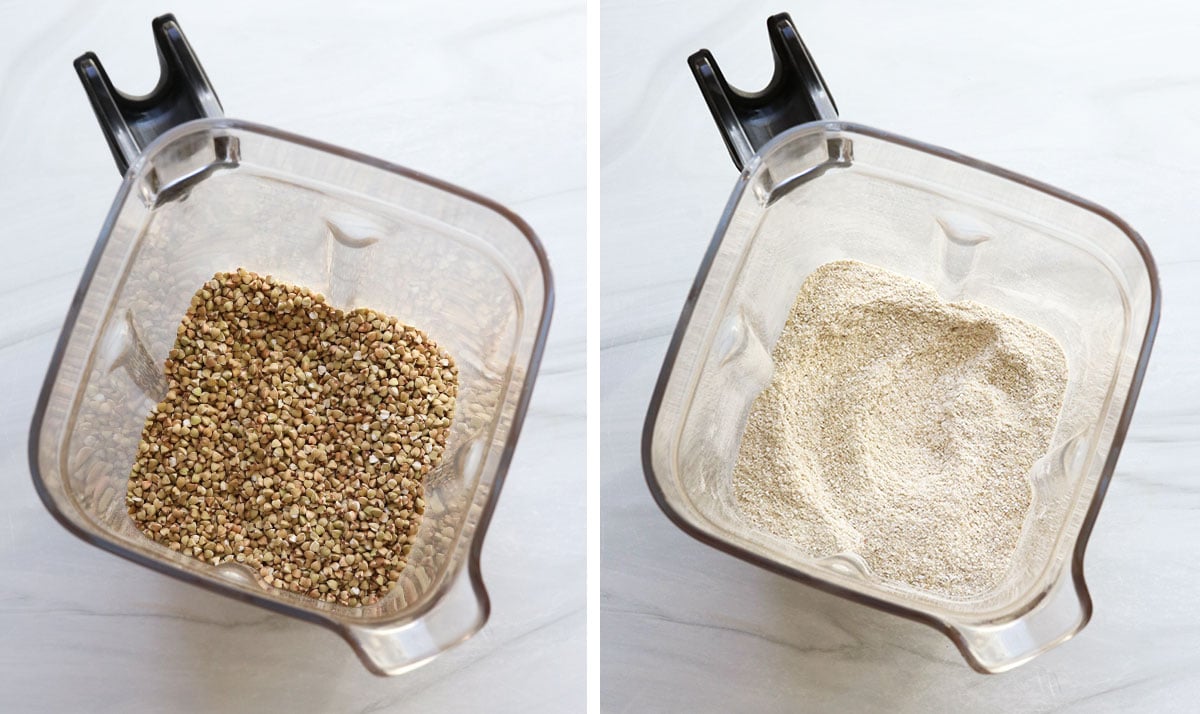
To make homemade buckwheat flour, add at least 2 cups of buckwheat groats to a high-speed blender. Secure the lid and process until the groats are ground into a very fine texture, similar to flour.
It’s ready to use in just about two minutes of blending.
Option #2: Coffee Grinder
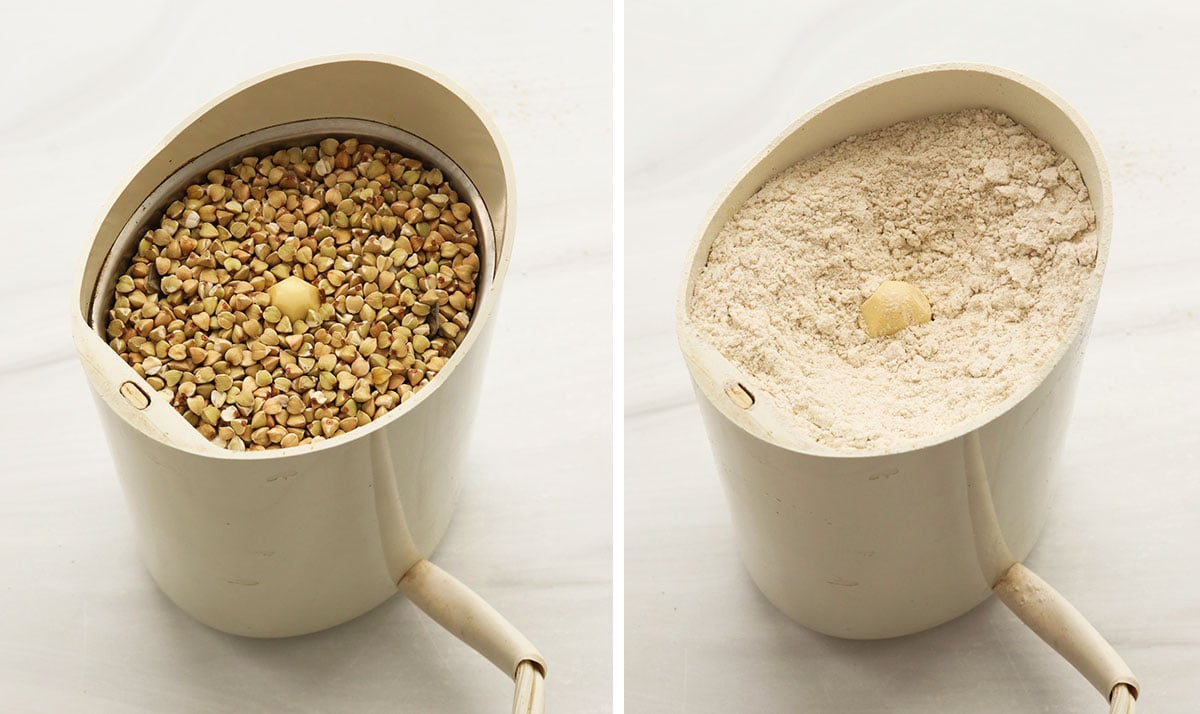
If you don’t have a high-speed blender on hand, you can also use a coffee grinder to make buckwheat flour, but you’ll need to work in smaller batches.
My coffee grinder can only process a 1/4 cup of groats at once, but it works just as well as the blender, if not better.
Storage Tips
Store buckwheat flour in an airtight container for up to a week in a dry place, making sure that no moisture is in the container so it won’t spoil.
For the best shelf life, store it in the fridge or freezer and it should last for months.
Buckwheat Flour Recipe FAQs
Buckwheat contains all 9 essential amino acids, making it a complete protein. It’s naturally gluten-free and works well for creating fluffy baked goods with a similar texture to wheat flour.
In addition to buckwheat, millet, corn, soy, rice, amaranth, arrowroot, teff, quinoa, and oats are naturally gluten-free. Be sure to carefully read labels when purchasing these grains, to avoid any cross contamination with gluten during the manufacturing process.
Either option is great as long as you start with a recipe that calls for the specific flour you want to use. (Don’t make substitutions and expect amazing results with either flour.) Buckwheat flour will turn out slightly more like all-purpose flour when compared to almond flour in baking.
Recipes for Buckwheat Flour


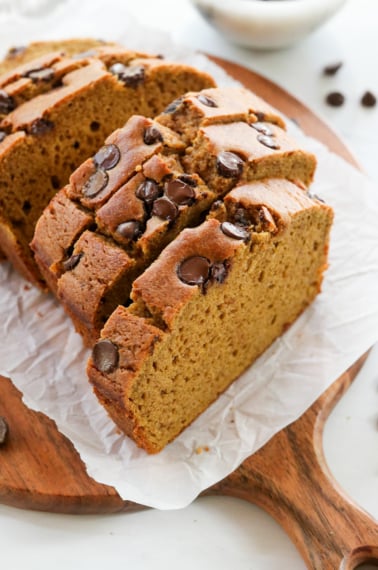

If you try making buckwheat flour, please leave a comment and ⭐ star rating below to let me know how it works for you. Thanks for visiting!
How to Make Buckwheat Flour in 2 Minutes
Ingredients
- 2 cups buckwheat groats (or more, as needed)
Instructions
- Add the buckwheat groats to a high-speed blender and secure the lid. Blend until the groats are pulverized into a very fine texture like flour. This may take up to 2 minutes. You may use more than 2 cups if you need more flour, but don't use less than 2 cups to ensure an even texture.
- If you don't have a high-speed blender, you can use a coffee grinder instead, but you'll need to work with just a 1/4 cup of groats at a time.
- Use the buckwheat flour right away in your favorite buckwheat recipes, or store it in an airtight container in your pantry until you're ready to use it. It should last for at least 3 months, or possibly longer if you store it in the fridge.











I love how easy it is to make light buckwheat flour in a coffee grinder. It tastes so much better than using the store-bought bag that is blue-gray in color!