
This post may contain affiliate links. Please read my disclosure and privacy policy.

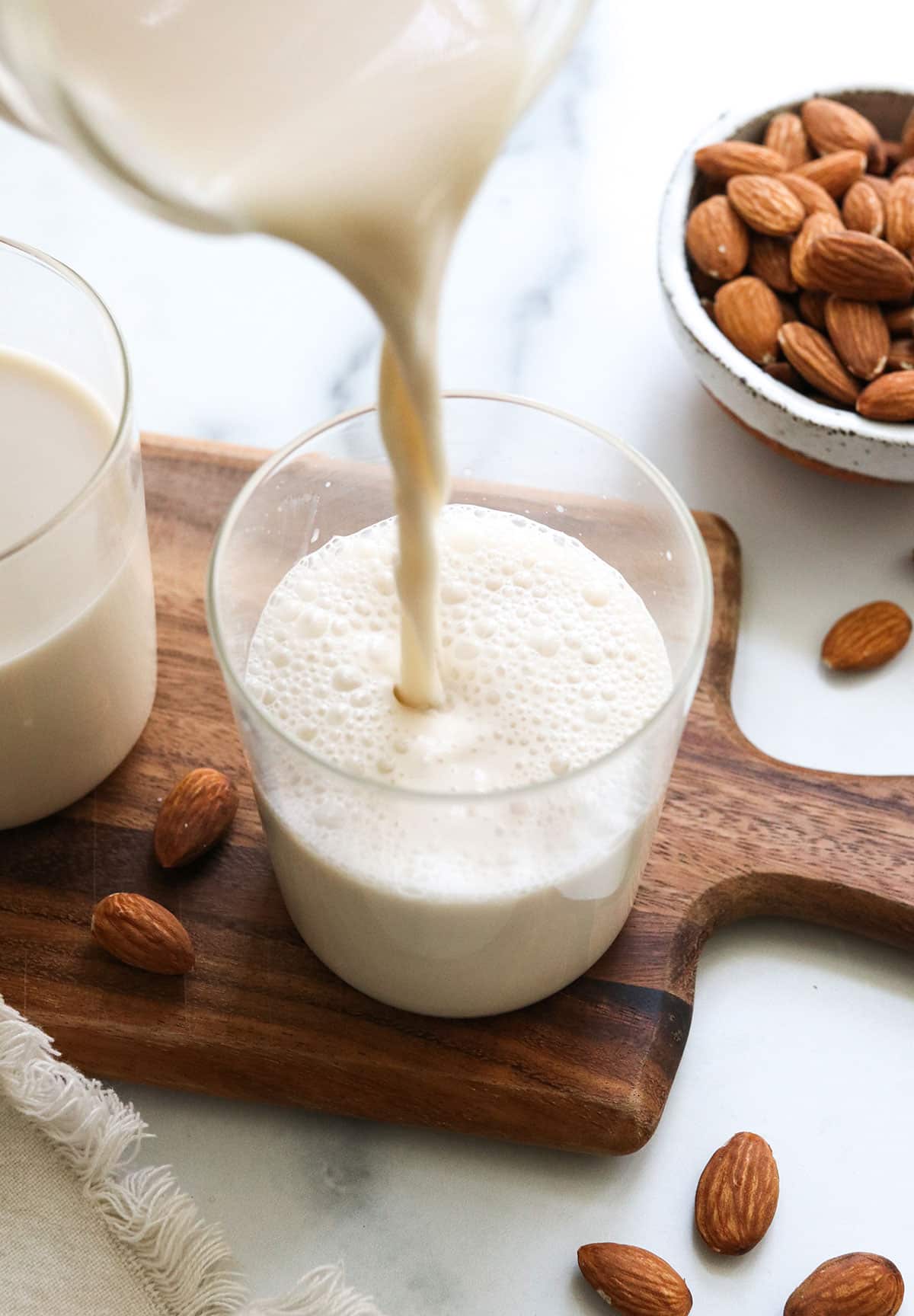
All you need are two ingredients—almonds and water—plus a few minutes of effort to make almond milk. The hardest part of this recipe is cleaning the equipment when you’re done!
You could probably use any recipe online and end up with something that tastes better than the store-bought version. What makes my version special is how many times I’ve experimented with it.
As a result, I can show you how to adjust the flavor, the creaminess, and even how to skip the extra equipment to streamline the process. Be sure to read my extra tips below!
⭐⭐⭐⭐⭐ Review
“I was skeptical at first because I’ve honestly never made almond milk before!! I can’t believe how easy it is and it’s delicious!!! I am using it as my coffee creamer!” – Jeanette
Homemade Almond Milk Ingredients
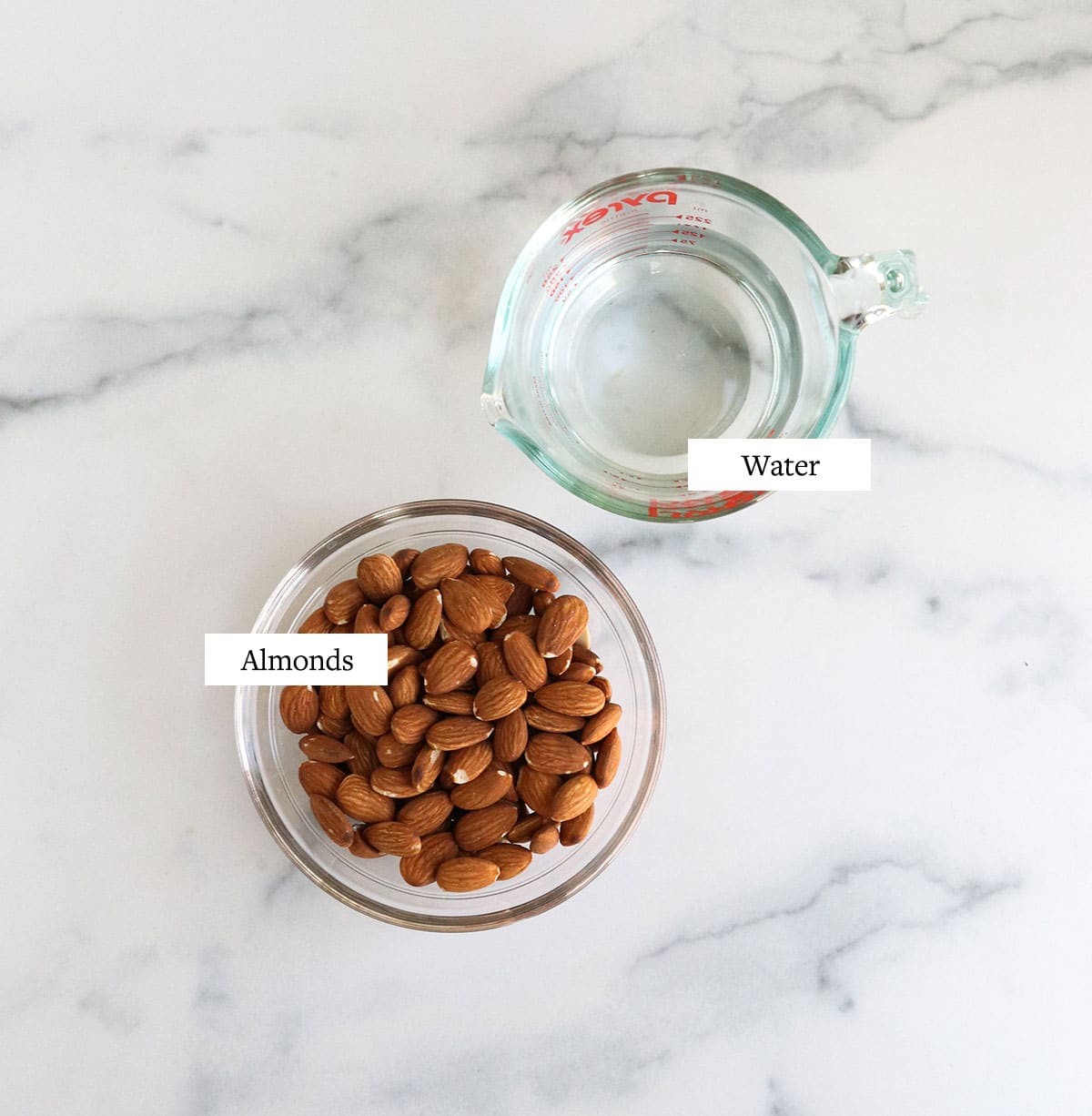
You only need two ingredients to make almond milk:
- Almonds. I tend to use almonds that are not roasted or salted so that the almond milk will have a neutral, mild flavor. However, roasted nuts will work as well. There’s no need to buy blanched almonds (with skins removed), since you’ll be removing the pulp later anyway.
- Water. This is the liquid used for blending this dairy-free “milk.”
You can also make it more flavorful by adding a teaspoon of vanilla extract, 1-2 tablespoons of maple syrup, or up to 4 pitted Medjool dates for sweetness. For a richer consistency, you can also add up to a tablespoon of coconut oil.
Try my Vanilla Almond Milk and Chocolate Almond Milk for flavor variations.
How to Make Almond Milk
Step 1: (Optional)
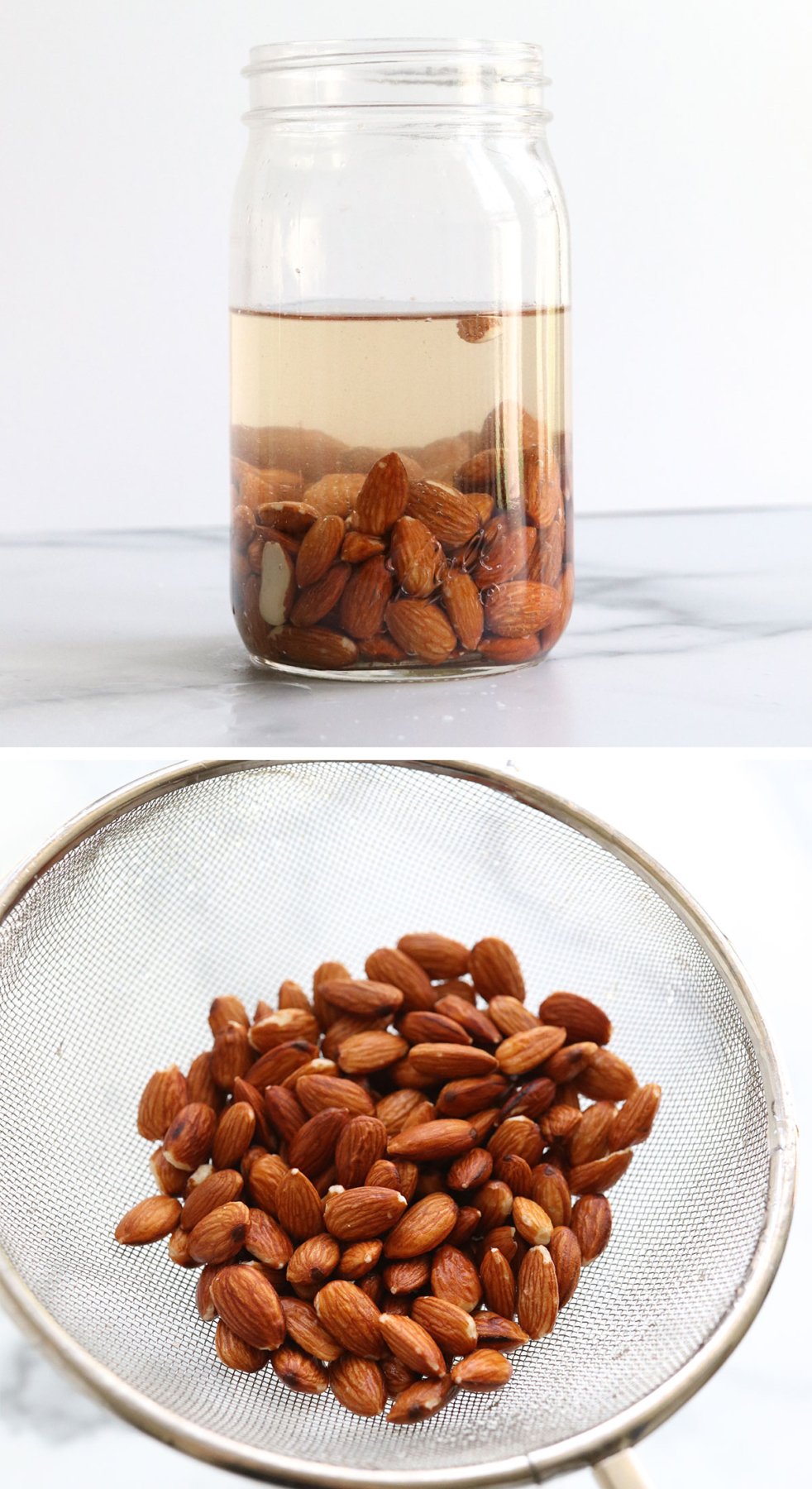
Soaking almonds ahead of time can make them softer and help them break down more easily in your blender. Research doesn’t necessarily support the idea that soaking nuts improves digestion or reduces anti-nutrients, so this step is mostly helpful if you don’t have a powerful blender.
To soak almonds, add them to a large jar or bowl and cover with at least 2 inches of water. This allows room for them to expand as they soak. (I usually use 2 cups of water to cover 1 cup of almonds.)
Let them soak for up to 8 hours, then drain away the soaking water by pouring the almonds into a fine mesh strainer.
Step 2:
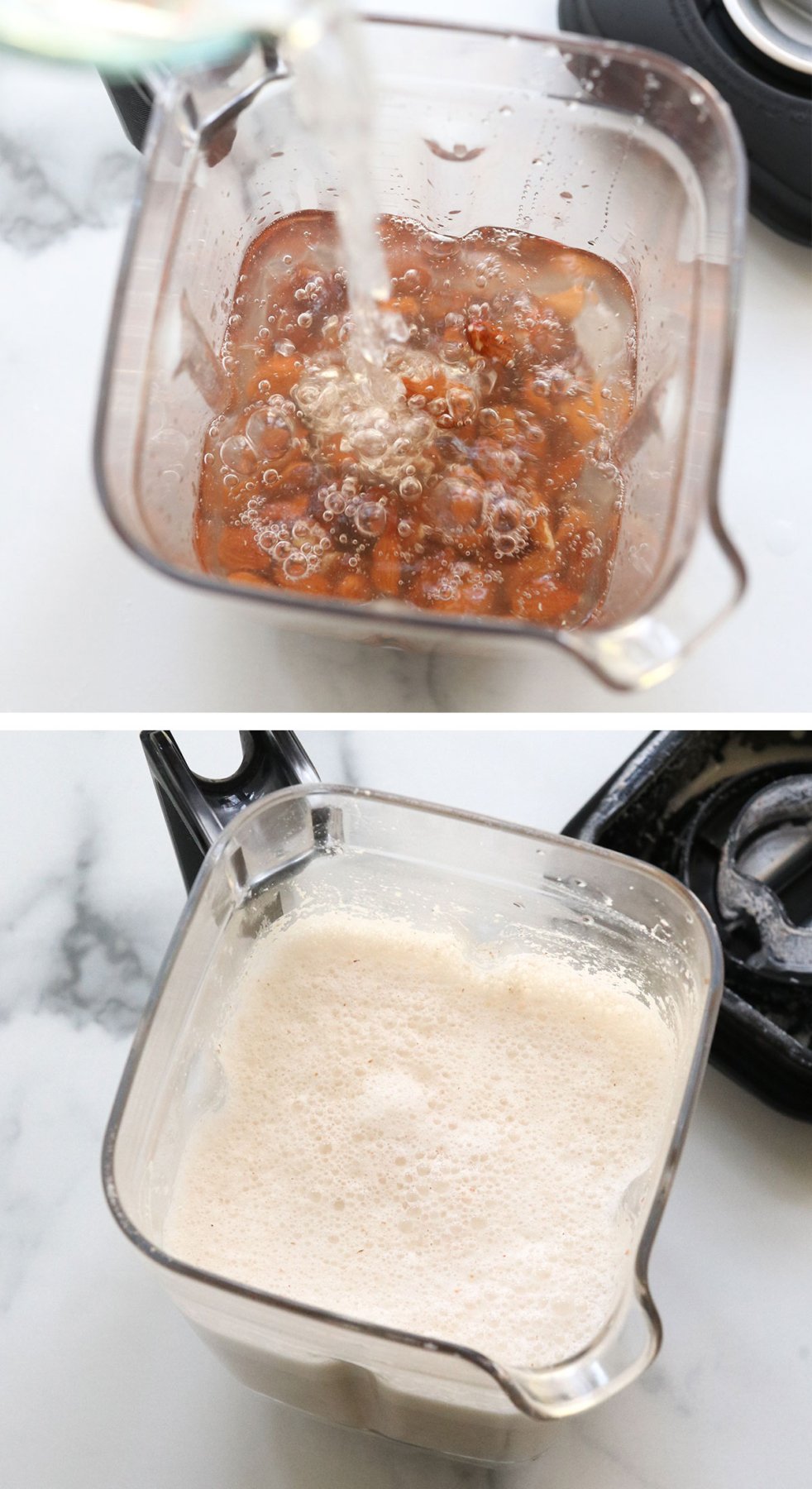
Whether you soaked the almonds or skipped that step, add the almonds to a high-speed blender, along with 4 cups of fresh water. Secure the blender’s lid and blend until the almonds are broken down and the mixture looks creamy, about 60 to 90 seconds.
There should be almost no visible almond pieces when the blending is complete.
Step 3:
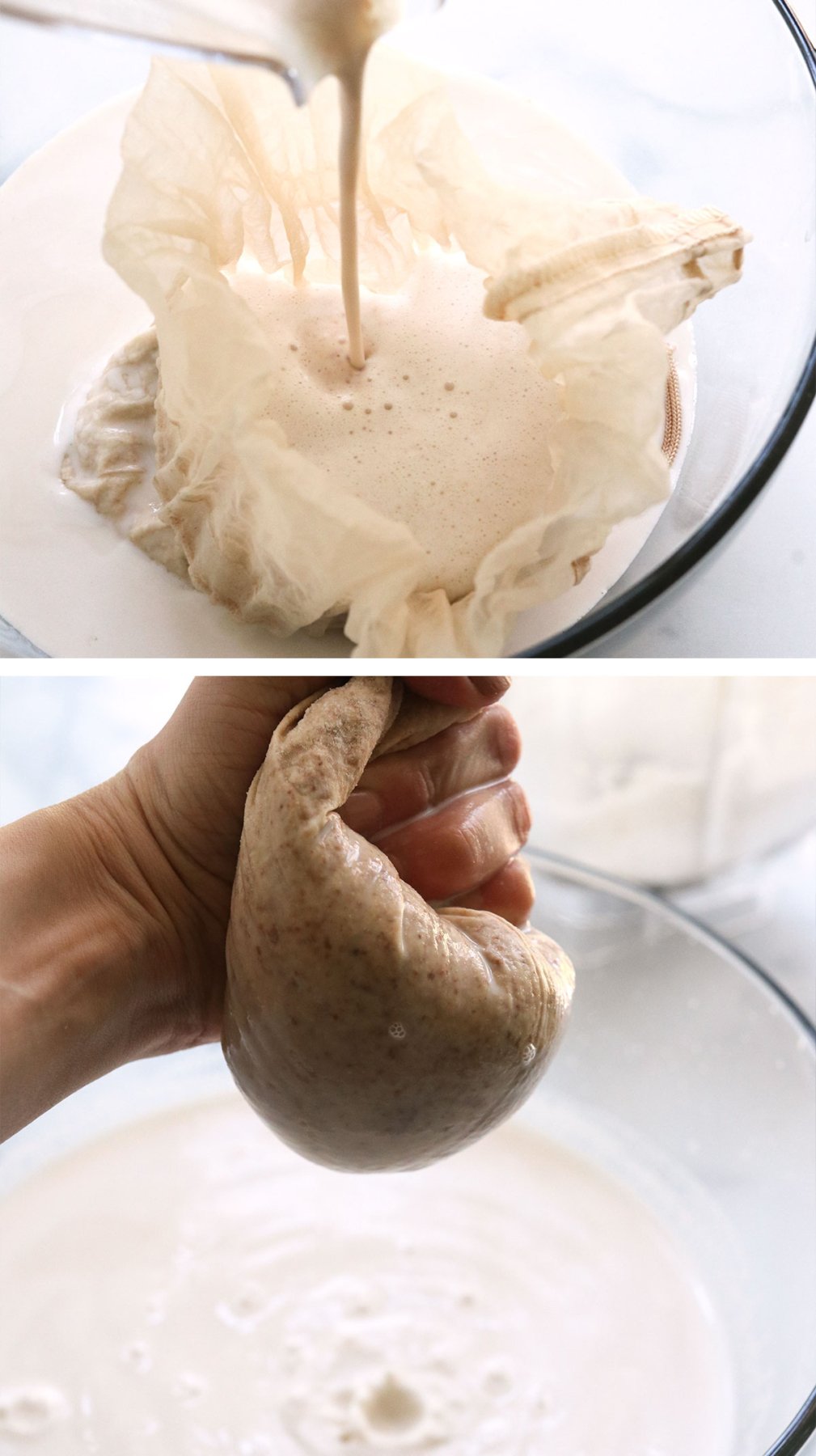
Arrange a nut milk bag or cheesecloth over a large bowl, then pour the blended almond mixture into the bag.
Carefully squeeze the bag to remove as much liquid as possible from the almond pulp.
Detoxinista Tip
If you don’t have a nut milk bag, make Almond Butter Milk instead. (It takes about 1 minute with no straining.)
Almond Pulp Recipes
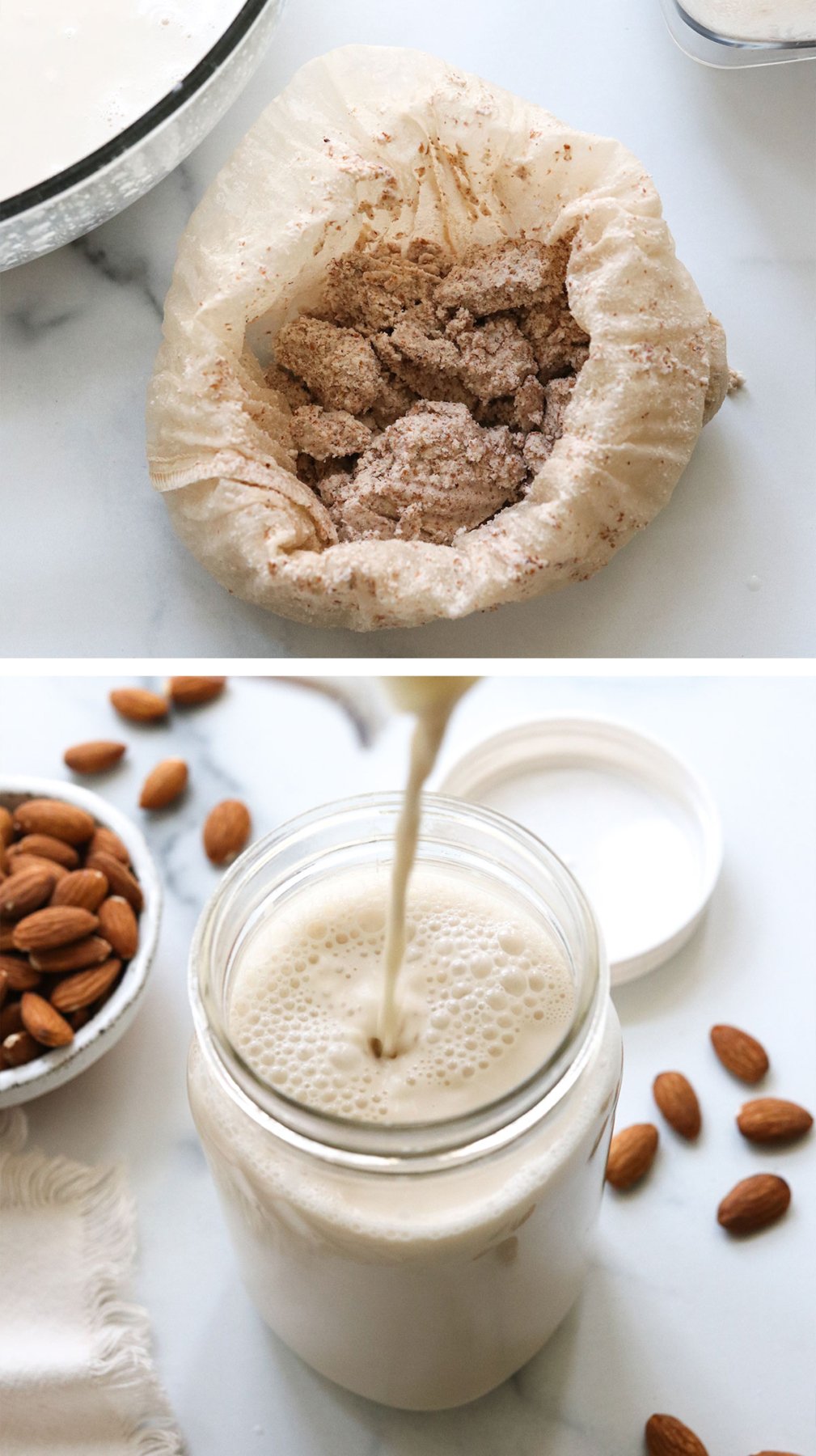
Use the leftover almond pulp to make Almond Pulp Hummus or Almond Pulp Brownies. Both of these recipes have been developed using the wet pulp immediately after making a batch of almond milk, so no extra effort is required.
Step 4:
You can use the almond milk right away, or add any extra flavorings to taste, such as vanilla, maple syrup, or a pinch of sea salt.
Note: It’s best not to add flavorings, such as vanilla or cocoa powder, before straining out the pulp. In my experience, cocoa powder can clog the bag, so you won’t get as much milk out. It also changes the flavor of the pulp, making it less suitable for use in other recipes later.
Storage Tips
Transfer the almond milk to an airtight container and store it in the fridge for up to 5 days. Or you can freeze it for up to 3 months. Because this recipe doesn’t call for preservatives, it won’t last as long as store-bought milks do. (You’ll be able to tell it’s gone off when the smell or flavor goes sour.)
Be sure to make only what you’ll drink in a week, or plan on freezing the leftovers. You can easily scale the recipe as needed!
Recipes with Almond Milk
Now that you’ve mastered making almond milk, here are some easy ways to enjoy it.
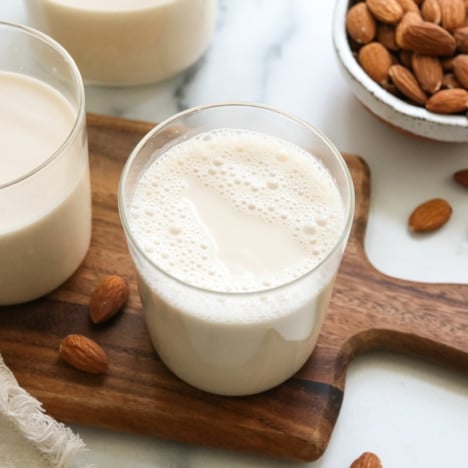
Anywhere you use regular milk, you can typically substitute it with almond milk. Homemade almond milk even creates a luxurious foam for lattes!
How to Make Almond Milk (and use leftover pulp)
Ingredients
- 1 cup almonds (not salted)
- 4 cups water
Instructions
- Optional Step: To soak the almonds before blending, cover them with 2 cups of water in a large bowl or jar, and let them soak for 4 to 6 hours. (This step may help with blending later if you don't have a powerful blender.) Drain the almonds through a fine mesh strainer before moving on to the next step.
- Add the almonds and 4 cups of fresh water to a blender. Secure the lid and blend on high-speed for at least 60 seconds, until no pieces of almonds are visible and the mixture looks creamy.
- Pour the almond milk through a nut-milk bag or cheese cloth, squeezing well to extract the milk. You can save the remaining almond pulp for another recipe (see the full post for ideas) or discard. If you would like to flavor the almond milk with vanilla or chocolate flavorings, this is the time to whisk in any additions.
- Store the almond milk in an airtight container in the fridge for up to 4 days. (You can freeze leftovers, if needed, for up to 3 months, too!)
Video
Notes
Nutrition
If you try this almond milk recipe, please leave a comment and star rating below, letting me know how you like it!







WOW….this is awesome and SO much better than the box kind….EASY…. Why the short shelf life in the fridge??
It doesn’t have the same preservatives that the boxed stuff does, so it will go bad faster. I’ve been known to use mine for a little over a week, but you will *know* when it’s bad– it will taste awful after too long!
Could I use raw honey instead of maple syrup? It may last an extra day too with honey.
Sure!
Thank you so much for this almond butter receipe. I tried making it tonight and turned out really good, then i tried honey roasted peanut butter, execelent good and nutrious and ya know whats in this stuff, next is the almond milk, but need to get more almonds. gonna share this with my friends.
I just put 3 cups of water and 2 tablespoons of almond butter (I make my own, but any will work) in the blender for a few minutes (even though I have a vitamix, because the small particles require longer blending). Then I put a fine mesh tea strainer (a coffee filter would work too) on whatever container I’m going to use and strain it through. It stays in the fridge for a few days, just like normal almond milk. If you’re not picky about the pieces you can skip straining it altogether. I bet with blanched almonds you wouldn’t even need to stain it, but I can’t find organic blanched ones, and I like that the organic ones I buy are in the bulk section (reduces waste).
Do you have a source for your organic almonds? It seems that you use a lot of them so I would think you get them in bulk somewhere. I have a large family and so making these recipes can be very expensive. Any info on a good source for organic bulk shopping would be appreciated. Thank you
Hi Paula! I’ve listed a few sources for raw & organic almonds in this post: https://detoxinista.com/2012/08/are-your-almonds-truly-raw/ You can buy them in bulk directly from one of the farms I’ve mentioned there, though shipping is still rather expensive. Lately, I’ve been using less almonds and just buying the organic, raw almonds from Trader Joe’s.
Hi, thanks for the inspiration. I am always looking for ways to make interesting, good for my family that is a healthy alternative. I figure any change is good. This almond milk recipe looks promising, will give it a try. My daughter does not like the store version, so maybe she will give this a try. Also love that you suggest but don’t force the issue of raw eating, it is more inviting to those of us that take change more slowly. Thanks Again!
Almond pulp is actually really useful if you dry it out. Either in the oven at a low temperature or in a dehydrator. If you want great almond flour (and you’re not eating completely raw) blanche the almonds to get the skins off: http://www.ehow.com/how_2081995_blanche-almonds.html
After you make the milk, dry out the pulp and grind it up in a vitamix/spice grinder/bullet. BAM…perfect almond flour to use in baking. It tastes more bitter if you leave the skins on, but then you can manage some raw-some brownie bites with the help of a dehydrator.
I used to make these all the time: http://recipes.sparkpeople.com/recipe-detail.asp?recipe=609048
<3
Thanks for sharing! I love Ani Phyo’s recipes, so I’ll have to try those cookies! 🙂
This recipe looks fascinating, but I just have a question. Should I use raw or roasted almonds? Raw almonds are my most favorite snack 🙂
Does it make a difference? And sorry if someone has stated this already; I just didn’t see it.
I don’t think it makes a huge difference, though it will effect the flavor, since roasted almonds taste different. I prefer the taste of raw almonds, so that’s what I use!
I found the almond pulp works well in hummus. Also have made a few cookies with this. Although it’s loaded with sugar, I used the Alton Brown’s Chewy Chocolate Chip recipe (my all time favorite chocolate chip cookie). Just replaced all the bread flour with almond meal. I also had to put it in a 9×13 pan and cooked it a little longer. Again, this recipe isn’t the greatest for raw foods. But I imagine a lot of the ingredients could be replaced with more raw items.
How much coconut oil do I use?
The recipe calls for 1 Tablespoon of coconut oil, but it’s completely optional. I usually make my almond milk “plain,” using just the almonds and water, but the coconut oil makes it extra-creamy!
Hey Megan, I was wondering how you can use the homemade almond milk instead of regular milk… wheres the calcium and nutritional value?
Hi Victoria! In regards to recipes, you can use almond milk as a substitute for regular milk in most situations. Personally, I don’t think we should be drinking regular milk at all, and don’t believe it to be a good source of calcium– in fact, from what I understand, calcium is actually depleted from our bones when we drink milk, due to the high protein/acidity content. (You can read more on that here: http://saveourbones.com/osteoporosis-milk-myth/) Countries with the lowest consumption of dairy products also have the lowest fracture incidence in their population.
It’s difficult to determine the exact nutritional value in homemade almond milk, but it should retain all of the nutrition found in the almonds used– one cup of almonds contain 25 % of your daily calcium, 25% vitamin D, 125% vitamin E, and 25g of protein. (Divide that by 4 servings for this recipe)
Hope that helps!
Spinach and Kale have more calcium then milk. I am with you all the way Megan. I know a woman who used almond milk her whole life because she was allergic to regular milk. She had a Bone density test and the Doctor said her bones were strong as if she was 30 years old. She’s 60.
Hi, just wondering if you have worked out the macros, carbs, protein and fat per serving of homemade almond milk? I make a litre of almond milk every 5 days or so but have started to track my macros but the almond milk is confusing me????